Volterra: How Tuscany's Most Anciently Fortified Hilltop City Became Central Italy's Most Geologically Commanding Luxury Address
March 31, 2026 · 12 min read
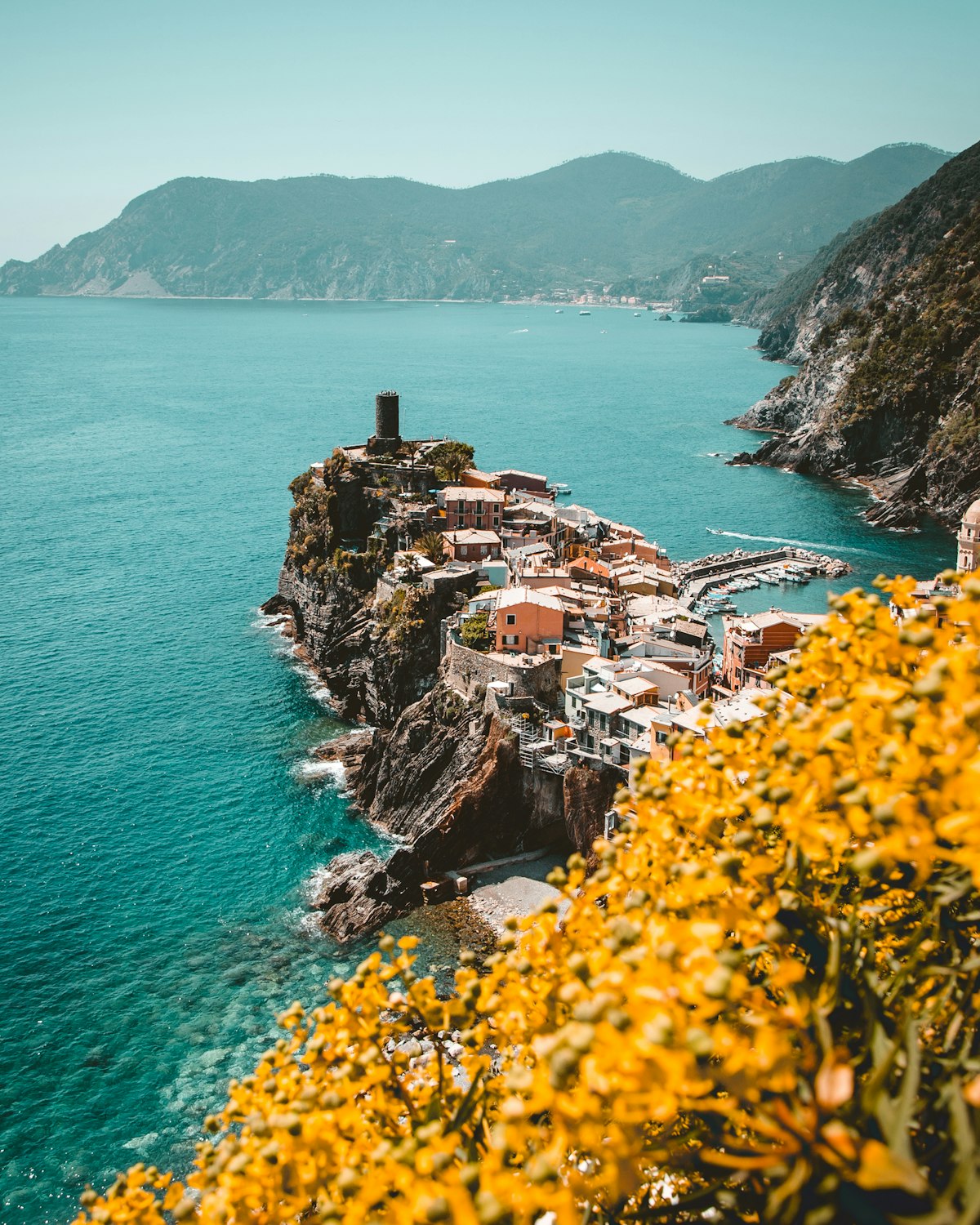
Tuscany's hilltop towns are marketed with such relentless uniformity — cypress-lined roads, terracotta rooftops, golden-hour photography — that the genuine differences between them are often obscured. Volterra is the corrective. Rising 545 metres above sea level on a massive plateau of Pliocene clay and sandstone, commanding views that extend from the Apuan Alps to the sea, this city of ten thousand inhabitants is older than Rome, more geologically dramatic than Siena, and more artisanally authentic than any comparable Tuscan destination. Its Etruscan walls — segments of which have stood for twenty-six centuries — enclose a civic continuity that no other city in the region can match. And its alabaster, quarried from the surrounding hills since the third century BC, sustains an artisan tradition that represents one of the last genuinely pre-industrial craft economies in Western Europe.
The Etruscan Acropolis
Before Florence existed, before Siena was founded, before Rome absorbed the Italian peninsula into its imperial project, Volterra — known as Velathri to its Etruscan inhabitants — was one of the twelve major cities of the Etruscan confederation, a polity that dominated central Italy from the eighth to the third century BC. The archaeological evidence is not buried in museum basements; it is structural. The Porta all'Arco, the city's monumental gate, incorporates massive blocks of tufa stone carved and assembled in the fourth century BC — making it the oldest continuously functioning urban gateway in Italy. The Etruscan walls, of which approximately two-thirds of the original seven-kilometre circuit survives, demonstrate engineering ambitions that exceeded the medieval walls built over them by a factor of two: the Etruscan perimeter enclosed a city three times larger than the medieval town, suggesting a population and urban sophistication that the subsequent two millennia never equalled.
The Guarnacci Museum: Three Thousand Years in Residence
The Museo Etrusco Guarnacci, founded in 1761, is one of the oldest public museums in Europe and houses the single most important collection of Etruscan funerary art outside of Rome. Its six hundred alabaster cinerary urns — each carved with mythological scenes, portraits of the deceased, or depictions of the journey to the underworld — represent not merely archaeological artefacts but evidence of a sculptural tradition that has continued, without interruption, in the same city, using the same material, for over two thousand years. The museum's most celebrated piece, the Ombra della Sera (Shadow of the Evening) — an elongated bronze figure of extraordinary modernist beauty — predates Giacometti's similar explorations by twenty-three centuries, a fact that art historians note with a mixture of admiration and discomfort. Volterra's artisans did not need the twentieth century to discover abstraction; they had been practising it since before the Roman Republic.
Alabaster: The Living Material
Volterra's relationship with alabaster is not nostalgic; it is economic. Approximately thirty workshops in the city centre continue to quarry, carve, and sell alabaster objects — from translucent lamp shades that glow with an interior light to sculptural pieces that command thousands of euros — using techniques that have evolved continuously since the Etruscan period. The material itself, a fine-grained variety of gypsum found in deposits throughout the surrounding hills, possesses properties that no synthetic substitute can replicate: a translucency that allows light to penetrate several centimetres into the stone, a softness that permits extraordinarily detailed carving, and a range of natural colouration — from pure white through honey, grey, and veined varieties — that ensures each piece is unique. The Consorzio Turistico Volterra Valdicecina has documented a forty-percent increase in workshop visits since 2019, driven by a generation of luxury consumers who value artisanal provenance over industrial consistency.
The Balze: Geology as Drama
The western edge of Volterra's plateau terminates in the Balze — a series of massive clay cliffs created by centuries of erosion that have progressively consumed the western portion of the city. The Badia Camaldolese, a medieval abbey, hangs on the cliff edge, its former cemetery now empty air above a hundred-metre drop. Churches, houses, and entire streets have disappeared into the abyss over the centuries, and the erosion continues at a rate of several centimetres per year — a geological process that is simultaneously destructive and sublime. The Balze are not a tourist attraction in the conventional sense; they are a landscape of existential confrontation, a place where the impermanence of human construction is made visible against the timescale of geological process. For visitors accustomed to the manicured perfection of Tuscan tourism, the Balze are a necessary shock — a reminder that Volterra's beauty is not decorative but geological, rooted in forces that predate and will outlast every human intervention.
The Piazza dei Priori
Volterra's central square — the Piazza dei Priori — is the oldest civic square in Tuscany, predating both Siena's Campo and Florence's Piazza della Signoria. The Palazzo dei Priori, completed in 1257, served as the model for Florence's Palazzo Vecchio, a genealogy that Florentines rarely acknowledge. The square functions today as it has for eight centuries: a place where civic life is conducted in public, where the evening passeggiata fills the space with conversation, where the seasonal rhythms of market days and festivals provide the structure that tourism alone cannot supply. The absence of international brand retail — no global fashion houses, no chain restaurants, no luxury hotel lobbies opening onto the square — is Volterra's most distinctive luxury feature. The piazza belongs to the city, not to its visitors, and that ownership is palpable.
The Real Estate Proposition
Volterra's property market operates in a register fundamentally different from the Chianti-Montalcino corridor that dominates international Tuscan real estate. Restored palazzi within the walls — four to six bedrooms, period features, often with alabaster detailing — trade between €500,000 and €2.5 million, a fraction of equivalent properties in San Gimignano or Cortona. Agricultural estates on the surrounding plateau, combining olive groves, truffle woodland, and panoramic positions, range from €1.5 million to €6 million for properties of twenty to fifty hectares. The buyer profile is distinctively European and culturally motivated: academics, architects, art collectors, and professionals who have chosen Volterra for its intellectual density rather than its social cachet. The absence of a mass-tourism economy — there is no cruise-ship traffic, no airport proximity, no beach — functions as a natural filter that preserves the civic character and, consequently, the long-term value of property investment.
Twenty-Eight Centuries of Continuity
What Volterra offers the discerning visitor or investor is something that cannot be fabricated or accelerated: authentic temporal depth. This is a city where the gate you walk through was built before the Parthenon, where the material carved in today's workshops was quarried before the Roman conquest, where the civic square predates the Renaissance that supposedly invented civic space. In a luxury market increasingly saturated with "heritage" brands that trace their lineage to the nineteenth century, Volterra's twenty-eight centuries of documented urban life represent a different order of authenticity — not a narrative constructed for commercial purposes, but a continuity sustained by geology, craft, and the stubborn refusal of a hilltop city to become anything other than itself.