Verona: How Italy's City of Love Became the Veneto's Most Compelling Ultra-Luxury Address
March 19, 2026 · 16 min read
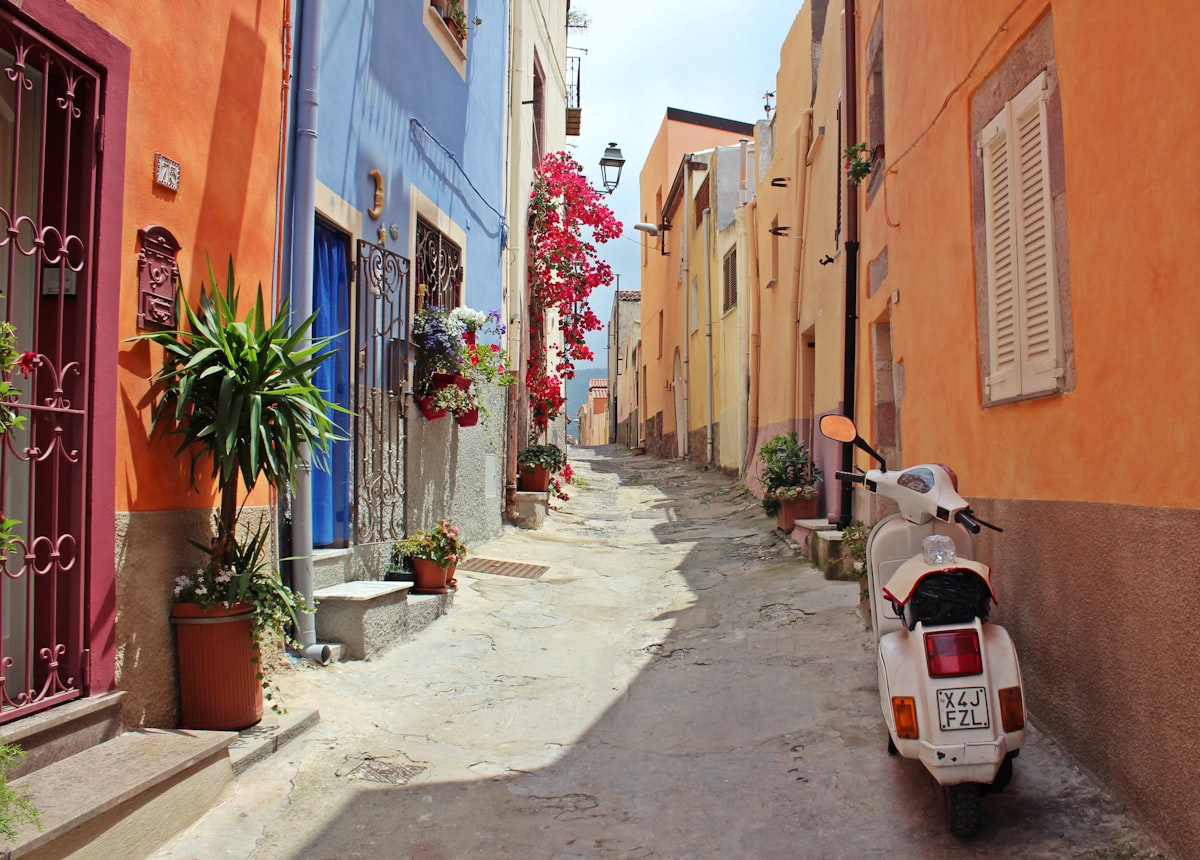
Verona suffers, commercially speaking, from a branding problem that most cities would envy. Shakespeare's setting of his most famous love story in this compact Veneto capital has produced a tourist infrastructure built almost entirely around a fictional balcony on Via Cappello — a narrow medieval street where, on any given summer afternoon, several hundred visitors queue to photograph themselves beneath a stone ledge that has no historical connection to any Capulet, real or imagined. This Juliet industry generates significant revenue and significant noise, and it has, for decades, obscured the far more substantial story of Verona as one of northern Italy's most architecturally complete, gastronomically significant, and — for those paying attention — financially compelling luxury addresses.
The Arena: Where Spectacle Becomes Real Estate
The Arena di Verona — the first-century Roman amphitheatre that seats 15,000 and hosts what is arguably the world's most spectacular open-air opera season — is to Verona's luxury market what the Colosseum never quite became to Rome's. Where Rome's ancient monument is surrounded by tourist infrastructure, traffic chaos, and aggressive souvenir vendors, Verona's Arena sits at the centre of Piazza Bra — a vast, elegant public square lined with restaurants, cafés, and the kind of civic buildings that communicate institutional confidence. The Arena is not a monument to visit; it is an amenity to use. Season-ticket holders from Verona's professional and entrepreneurial class occupy the same stone seats that Roman citizens used two millennia ago, watching Aida or La Traviata under stars while waiters from the adjacent Liston restaurants discreetly deliver spritzes during intermission.
The residential implications are direct. Properties overlooking Piazza Bra or within the acoustic radius of the Arena — close enough to hear the opening bars of Nabucco on a still summer evening — command premiums of 40-60% over equivalent space in Verona's other central zones. A recently renovated piano nobile apartment on the Liston, the promenade that lines the square's western edge, traded in late 2025 for €4.8 million — a figure that would have seemed absurd five years prior but that reflects the increasing recognition among international buyers that Verona offers a quality of life that Florence and Venice, crushed under the weight of their own tourism, can no longer deliver.
Valpolicella: The Wine Estate Frontier
Twenty minutes north of Verona's centro storico, the hills of Valpolicella — source of Amarone, one of Italy's most complex and expensive wines — have become the Veneto's answer to Chianti as a luxury estate market. But where Chianti's villa market matured decades ago and now operates at prices that reflect full-market efficiency, Valpolicella remains in its early ascent. Historic wine estates with functioning vineyards, stone-built farmhouses with panoramic valley views, and converted convents that combine agricultural heritage with residential potential are available at prices that would acquire only a modest apartment in Brunello country.
The numbers are instructive. A 15-hectare Valpolicella estate with a registered DOC vineyard, a restored seventeenth-century villa, guest accommodation, and a functional cantina currently trades between €3 million and €8 million — a fraction of the €15-30 million that equivalent properties command in Montalcino or Bolgheri. The wine itself provides a compelling income stream: Amarone della Valpolicella, which undergoes the appassimento process of drying grapes for three to four months before pressing, retails at €40-150 per bottle and has demonstrated consistent price appreciation over the past decade. For the ultra-high-net-worth buyer seeking a functional agricultural estate that generates revenue, prestige, and genuine pleasure, Valpolicella represents what Tuscany offered thirty years ago.
The Architectural Layers
Verona's built environment is, to architecture scholars, one of the most perfectly layered urban compositions in Europe. Roman foundations support Romanesque churches, which abut Gothic palazzi, which face Renaissance loggias, which were modified during the Austrian occupation and restored under the Italian state. The result is a city that reads like a geological cross-section of European civilisation, each era depositing its stratum without entirely erasing what came before.
For the luxury buyer, this layering creates opportunities that are simultaneously architectural and financial. The city's strict preservation framework — administered by the Soprintendenza with a rigour that can border on the theological — ensures that renovations are executed to exacting standards, which limits supply (every project takes longer and costs more) while protecting value (the result is a building that meets heritage standards recognisable to international buyers). A palazzo apartment in the historic centre, properly restored with modern systems concealed within medieval walls, represents an asset class that is functionally immune to the construction-driven oversupply that periodically destabilises Italian property markets.
Lake Garda: The Twenty-Minute Riviera
Verona's proximity to Lake Garda — Italy's largest lake, whose southern shore lies approximately twenty minutes from the city centre — adds a dimension to the lifestyle proposition that is difficult to replicate. Garda's western shore, particularly the stretch from Sirmione to Gardone Riviera, has long been a luxury destination in its own right, with grand hotels and private villas that have hosted everyone from Goethe to Gabriele D'Annunzio. But Verona's relationship with the lake is quotidian rather than touristic: this is where Veronese families spend Sunday afternoons, where professionals sail after work on summer evenings, where children learn to windsurf during school holidays.
The combination of a UNESCO-listed historic city, a world-class opera season, a wine region of increasing international prestige, and a major lake within commuting distance creates a lifestyle proposition that, among Italian cities, is essentially unique. Florence has culture but no lake. Como has a lake but limited urban culture. Milan has commerce but limited heritage charm. Verona offers all four, at price points that remain, by the standards of Italy's established luxury markets, almost irrationally attractive.
The Infrastructure Advantage
Verona Villafranca Airport — ten minutes from the city centre — offers direct connections to London, Paris, Munich, Amsterdam, and Dubai, with Ryanair and easyJet providing frequent low-cost links that have transformed the city's accessibility profile. The high-speed rail connection to Milan (one hour and ten minutes) and Venice (one hour and five minutes) places Verona at the intersection of northern Italy's economic and cultural corridors. For the remote-working professional or the semi-retired executive maintaining European business interests, Verona's connectivity solves the problem that defeats many Italian lifestyle destinations: the tyranny of beautiful isolation.
The Brenner motorway, connecting Italy to Austria and Germany via the Alps, passes directly through Verona — making the city a natural base for anyone whose lifestyle spans both sides of the Alpine divide. Innsbruck is three hours; Munich four. This Alpine adjacency explains the significant German, Austrian, and Swiss buyer contingent that has traditionally dominated Verona's international property market — and that is now being joined, increasingly, by British, American, and Gulf-based purchasers drawn by Italy's flat-tax regime for new residents.
The Undervaluation Thesis
Verona's current market positioning represents what value investors would recognise as a classic mispricing. The city offers architectural heritage comparable to Florence, culinary culture comparable to Bologna, lifestyle amenities comparable to Milan's lakeside satellites, and a cultural calendar anchored by an opera season that ranks among the world's finest — all at price points 40-60% below what equivalent quality commands in Italy's "first tier" luxury markets. The mispricing is not a function of any fundamental deficiency; it is a function of narrative lag. Verona has been marketed as a day trip from Venice, a romantic detour, a Shakespeare footnote. It has never been seriously positioned as what it actually is: one of Europe's most complete small cities and one of Italy's most compelling luxury investment propositions.
That narrative is shifting. And with it, inevitably, will shift the numbers.
Beyond the balcony and the tourist queues, Verona is quietly assembling the most compelling case of any Italian city for luxury undervaluation — proving that Shakespeare's most enduring legacy may be a real estate opportunity.