Venice's Palazzo Market: Why Grand Canal Addresses Are the Last True Trophy Assets in Europe
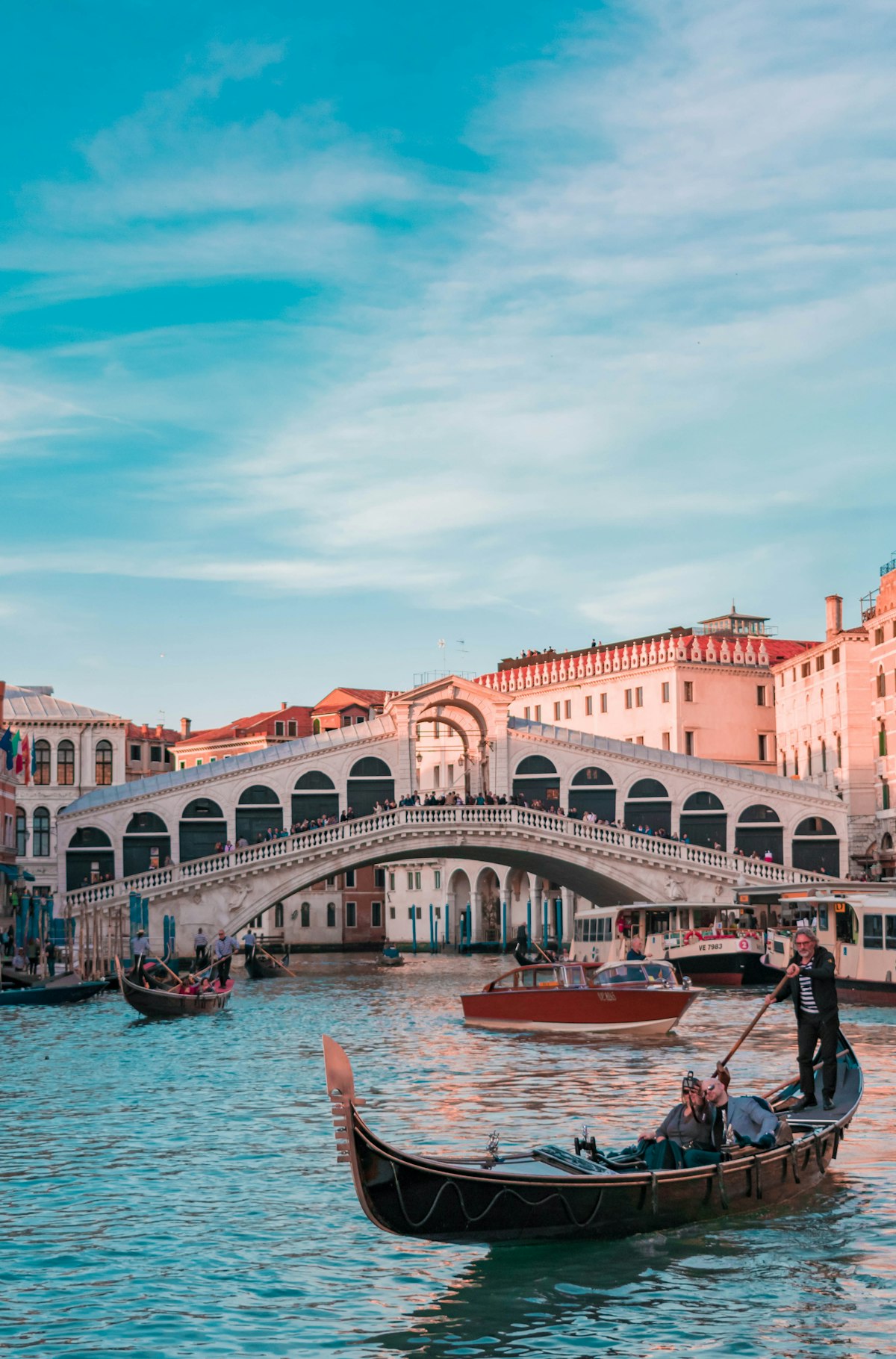
There are approximately 200 palazzi on Venice's Grand Canal. Not 200 available for purchase — 200 in total, built over six centuries between the Byzantine era and the fall of the Republic in 1797. Of these, perhaps five to eight change hands in any given decade. No new ones can be built. No existing ones can be demolished. The supply is, in the most literal sense possible, fixed forever. This single fact — the absolute finality of the inventory — makes the Grand Canal palazzo market unlike any other luxury real estate proposition in the world.
The Architecture of Power
A Venetian palazzo is not a house. It is a machine for displaying wealth and conducting commerce, designed when Venice controlled the eastern Mediterranean and its merchant families rivalled the crowned heads of Europe. The standard plan — water entrance (portego) on the ground floor, piano nobile (ceremonial floor) above, private apartments on the upper floors, altana (roof terrace) at the top — was codified by the 14th century and varied only in decoration and scale.
What buyers acquire is not merely space but provenance. The Ca' d'Oro, built 1428-1430, once had a facade covered in gold leaf and ultramarine — the most expensive pigments available. The Palazzo Barbarigo della Terrazza, with its Grand Canal terrace, hosted Titian as a tenant. The Palazzo Mocenigo accommodated Lord Byron during his Venetian period, when he wrote Don Juan in the piano nobile and kept a menagerie of dogs, cats, monkeys and a fox in the courtyard. Every palazzo comes with layers of history that no amount of money can manufacture.
The Market in 2026
Venice's luxury property market has undergone a structural shift since the pandemic. The city lost 1,200 residents in 2020 alone, accelerating a depopulation trend that had reduced the historic centre's population from 175,000 in 1951 to under 50,000 by 2025. This exodus, while culturally devastating, has paradoxically increased the availability of premium residential space. Families that had occupied palazzi for generations — sometimes as owners, sometimes as tenants under Italy's long-standing rent protections — have departed for the mainland, creating opportunities that had not existed for decades.
Prices for Grand Canal palazzi with full ownership (as opposed to divided apartments within a palazzo, which are more common) range from €8 million for a smaller, less prominent building requiring significant restoration to €30-50 million for a major palazzo in excellent condition with water entrance, private garden (exceptionally rare in Venice), and unobstructed canal views. The most recent headline transaction — reported but not officially confirmed — involved a complete palazzo near the Rialto Bridge at approximately €35 million.
The secondary market — premium apartments within divided palazzi — is more liquid and more accessible. A piano nobile apartment of 200-400 square metres in a Grand Canal palazzo typically commands €3 to €12 million, depending on the floor, the view, the condition, and the palazzo's historical significance. These apartments offer the palazzo experience — the frescoed ceilings, the terrazzo floors, the canal views — without the responsibilities of maintaining an entire building.
The Restoration Calculus
Buying a Venetian palazzo means committing to an ongoing relationship with water, salt, stone and bureaucracy. The acqua alta flooding that periodically inundates the ground floors has been mitigated by the MOSE barrier system, completed in 2020 and now operational, but salt damage to foundations and lower walls continues. A comprehensive restoration of a medium-sized palazzo — structural reinforcement, facade restoration, mechanical and electrical modernisation, interior fit-out — typically costs €3,000 to €8,000 per square metre, with timelines of three to seven years depending on the complexity of the Soprintendenza (heritage authority) approvals.
These costs are not optional. Italian heritage law requires owners of listed buildings — and every palazzo on the Grand Canal is listed — to maintain them in good condition. Failure to do so can result in compulsory works ordered by the Soprintendenza, at the owner's expense. The law is a double-edged sword: it preserves the architectural integrity that makes Venice priceless, but it means that palazzo ownership is a commitment, not a speculation.
The most sophisticated buyers approach restoration as an investment in irreplaceable value. A well-restored Grand Canal palazzo — one that combines authentic materials and techniques with modern comfort systems (underfloor heating, climate control, home automation) — appreciates at rates that consistently outperform luxury real estate indices. The reason is simple: the product cannot be diluted. While Dubai builds new waterfront towers annually and Monaco reclaims land from the sea, Venice's Grand Canal remains exactly as it was in 1797. Every well-executed restoration reduces the available inventory of neglected buildings and increases the scarcity premium.
Living in Venice: The Practical Reality
Venice is the most impractical luxury address in Europe. There are no cars. Deliveries arrive by boat. Furniture must be carried through narrow calli and over bridges. Supermarket shopping requires either a boat trip to the mainland or a walk to one of the city's diminishing number of local shops. In acqua alta season, rubber boots become formal footwear. The nearest international airport — Marco Polo — is accessible only by water taxi (€130 one way) or a combination of water bus and people mover.
And yet these inconveniences are precisely what makes Venice work as an ultra-luxury address. The absence of cars creates a silence found nowhere else in urban Europe. The water-access requirement means that privacy is inherent: there are no paparazzi on speedboats, no tour buses disgorging crowds at your door. The difficulty of logistics filters out casual residents, creating a community of people who have chosen Venice deliberately, knowing its costs and constraints, and who tend — as a result — to be deeply committed to the city's cultural life.
The social infrastructure for wealthy residents is significant if discreet. Private clubs include the Circolo dell'Unione and the Società del Casino, both occupying Grand Canal palazzi. The art scene revolves around the Biennale (every odd year), the Peggy Guggenheim Collection (permanently), and a constellation of private galleries and artist studios. Dining has improved dramatically: alongside the traditional bacari (wine bars), a new generation of restaurants — Glam by Enrico Bartolini, Local, Amo at the Fondaco dei Tedeschi — now offers cuisine that competes with Milan and Rome.
The Tax Landscape
Italy's flat tax regime for new residents — introduced in 2017 and renewed through 2028 — has been a significant driver of palazzo acquisitions by non-Italian buyers. The regime allows individuals who transfer their tax residency to Italy to pay a flat annual tax of €200,000 on all non-Italian income, regardless of the amount. For ultra-high-net-worth individuals with global income streams, this can represent an effective tax rate of well under 1%.
Venice, specifically, offers an additional incentive. The Italian government has introduced a range of tax credits and deductions for restoration work on historic buildings in the Veneto region, including a 65% tax credit for energy-efficiency improvements and a 50% credit for structural restoration. These credits can offset the substantial costs of palazzo renovation, making the effective net investment considerably lower than the headline figure.
The Long View
Venice's existential question — will it survive climate change? — is the elephant in every palazzo viewing. The MOSE barrier has answered the immediate flooding threat, but rising sea levels, subsidence, and the broader ecological fragility of the lagoon remain open questions. The Italian government has committed €6.2 billion to Venice's preservation through 2030, and UNESCO monitoring continues.
For palazzo buyers, the question is ultimately one of timeframe and risk tolerance. Venice has survived 1,600 years of flood, plague, invasion, occupation and neglect. The current generation of engineering and conservation — MOSE, the lagoon morphology project, the foundation reinforcement programme — represents the most significant investment in the city's physical survival since the Republic built the murazzi sea walls in the 18th century. Those who bought palazzi in the 1990s, when Venice was widely written off as sinking, have seen values triple.
The Grand Canal palazzo remains, in the final analysis, what it has always been: not merely a property but a position in one of humanity's greatest achievements. The price of entry is high. The costs of maintenance are relentless. The inconveniences are real. But for those who understand what they are buying — a piece of a city that exists nowhere else and can never be replicated — the palazzo market offers something that no other luxury real estate market can match: permanence.
Explore Italy with Latitudes
Private access to Italy's finest properties, lifestyle intelligence and curated experiences.
Request Private Access← Back to Italy Latitudes · Latitudes Media · Mauritius · Dubai · Monaco · Riviera · Portugal · Saint-Barth · Spain · Maison