Venice's Giudecca: The Island Where Contemporary Art Collides with Centuries of Silence
March 15, 2026 · 10 min read
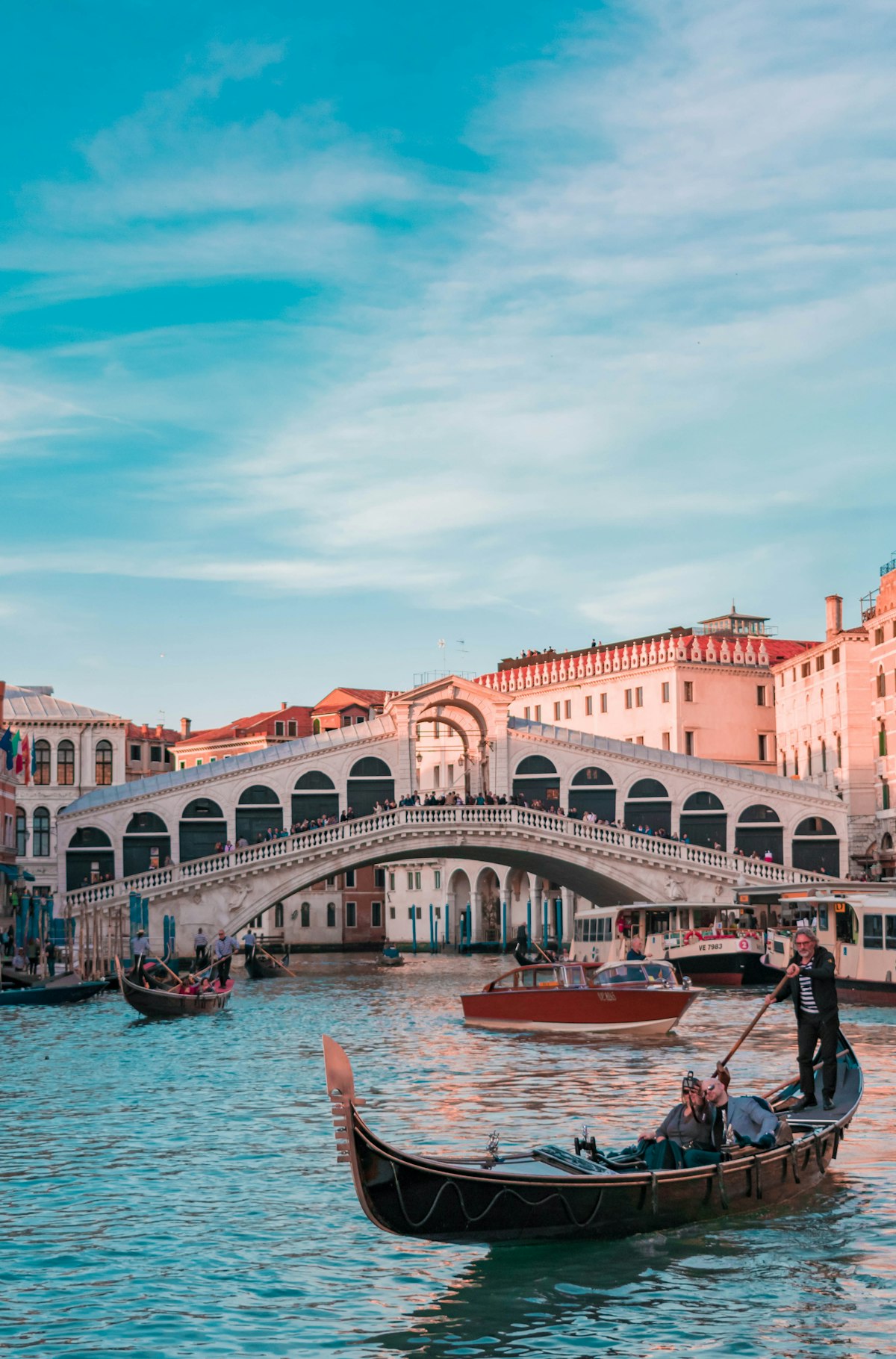
Stand on the Zattere promenade in Dorsoduro and look south across the Giudecca Canal. The island before you — long, thin, curving like a protective arm around Venice's southern flank — was, until recently, the city's least fashionable address. Factories. Social housing. A women's prison that still operates behind high walls. For centuries, Giudecca was where Venice put the things it didn't want to see. Today, it is where Venice's future is being quietly, expensively, assembled.
The Biennale Effect
The transformation began, as so many things in Venice do, with art. When the Venice Biennale expanded its footprint beyond the Giardini and Arsenale, Giudecca's disused industrial spaces — vast, raw, flooded with light from the lagoon — became irresistible to curators. The Molino Stucky, a colossal 19th-century flour mill that had stood abandoned for decades, was converted into the Hilton Molino Stucky in 2007. But the real catalysts were the smaller interventions: Fondazione Giorgio Cini's expansion on San Giorgio Maggiore (Giudecca's neighbouring island), private collectors opening project spaces in former boatyards, and a steady trickle of international galleries establishing Biennale-season outposts that gradually became permanent.
By 2024, Giudecca housed more contemporary art spaces per square metre than any comparable area in Venice — or, arguably, Italy. The island's geography reinforces the concentration: with only three vaporetto stops and no bridges to the main islands, Giudecca functions as a self-contained ecosystem. Artists and collectors who arrive for the Biennale discover they don't want to leave. And increasingly, they don't.
The Property Market: Scarcity as Strategy
Venice's residential property market is notoriously constrained — the entire historic centre contains approximately 60,000 residential units, and no new construction is permitted. Giudecca, however, occupies a unique regulatory niche. While new-build is equally impossible, the island's industrial heritage means that conversion projects — transforming warehouses, workshops and small factories into residences — remain viable, subject to the Soprintendenza's famously exacting standards.
The numbers reflect this scarcity. In 2025, the average price per square metre on Giudecca reached €7,800 — still below the Dorsoduro average of €9,200 but climbing at 12% annually, the fastest appreciation rate in Venice. The most exceptional properties — canal-facing apartments with direct views of San Marco and the Doge's Palace — have crossed €12,000 per square metre, placing them among the most expensive residential real estate in Italy. A restored 250-square-metre apartment with a private altana (rooftop terrace) and a boat dock recently traded at €3.2 million, approximately 40% above its 2021 valuation.
The Cipriani Anchor
No discussion of Giudecca luxury is complete without the Belmond Hotel Cipriani, which has occupied the island's eastern tip since 1958. The Cipriani is not merely a hotel — it is a social institution, a place where Venetian aristocracy, Hollywood royalty and European industrialists have gathered for nearly seven decades. Its presence has anchored Giudecca's premium positioning even during decades when the rest of the island languished.
In 2025, the Cipriani completed a €45 million renovation that added 12 new suites, a contemporary art collection curated by Axel Vervoordt, and a rooftop bar with 360-degree views of the lagoon. The renovation's most significant impact, however, was psychological: it signalled that Belmond (owned by LVMH since 2019) views Giudecca as a long-term luxury investment, not a legacy holding. The ripple effect on surrounding property values was immediate — agents report a 25% increase in enquiries for Giudecca properties in the six months following the renovation's announcement.
Living on the Giudecca: The Practical Poetry
Residents describe Giudecca life in terms that would seem paradoxical applied to Venice: spacious, quiet, private. While the main islands heave with 30 million annual tourists, Giudecca receives a fraction of that foot traffic. There are no souvenir shops. No gondola stands hawking €80 rides. Instead, there are bacari serving cicchetti to locals, a daily fish market on the Fondamenta, and a pace of life that recalls the Venice of Visconti's films rather than today's over-touristed reality.
The commute, paradoxically, enhances the appeal. The vaporetto from Giudecca to San Marco takes seven minutes — shorter than most Venetians' walking commute from their own sestiere. But those seven minutes on the water, watching the Basilica grow larger against the morning sky, constitute a daily ritual that residents describe as transformative. You don't drive to work. You don't take the metro. You cross a canal that has been crossed for a thousand years, and the day begins differently.
The Conversion Pipeline
Three major conversion projects are reshaping Giudecca's residential landscape. The former Junghans watch factory — a sprawling complex acquired by a Milanese development group — is being transformed into 28 residences ranging from 90 to 320 square metres, with prices starting at €1.1 million. The project includes shared gardens, a contemporary art exhibition space, and a private boat dock — amenities that are virtually unheard of in Venice's historic centre.
Further west, a disused glass workshop is becoming six luxury apartments with double-height living spaces that preserve the building's industrial character — exposed steel trusses, original brickwork, and windows that frame the lagoon like gallery installations. The third and most ambitious project is the conversion of a former ecclesiastical complex into a "palazzo-garden" concept: eight residences built around a central courtyard garden, the first new private garden to be created in Venice in over a century.
The Investment Thesis
Giudecca's appeal to the ultra-luxury buyer rests on a simple equation: Venice's desirability is permanent, its housing stock is fixed, and Giudecca represents the last meaningful reservoir of conversion potential within the historic centre. Add the Biennale's gravitational pull, the Cipriani's LVMH-backed permanence, and a quality of life that the main islands can no longer offer, and the investment case becomes compelling.
The risk, as with all Venetian property, is environmental — the MOSE barrier system has reduced acqua alta flooding events by 90% since its activation, but climate uncertainty remains a factor in long-term valuations. Yet for buyers who understand Venice — who see it not as a museum but as a living city adapting to its third millennium — Giudecca offers something extraordinary: the chance to own a piece of the world's most beautiful city in its quietest, most authentic, most artistically vital corner.
The factories are gone. The art remains. And the silence, on Giudecca, is worth more than gold.