Ravello: How the Amalfi Coast's Most Vertically Exalted Village Became Italy's Most Culturally Elevated Luxury Address
April 2, 2026 · 15 min read
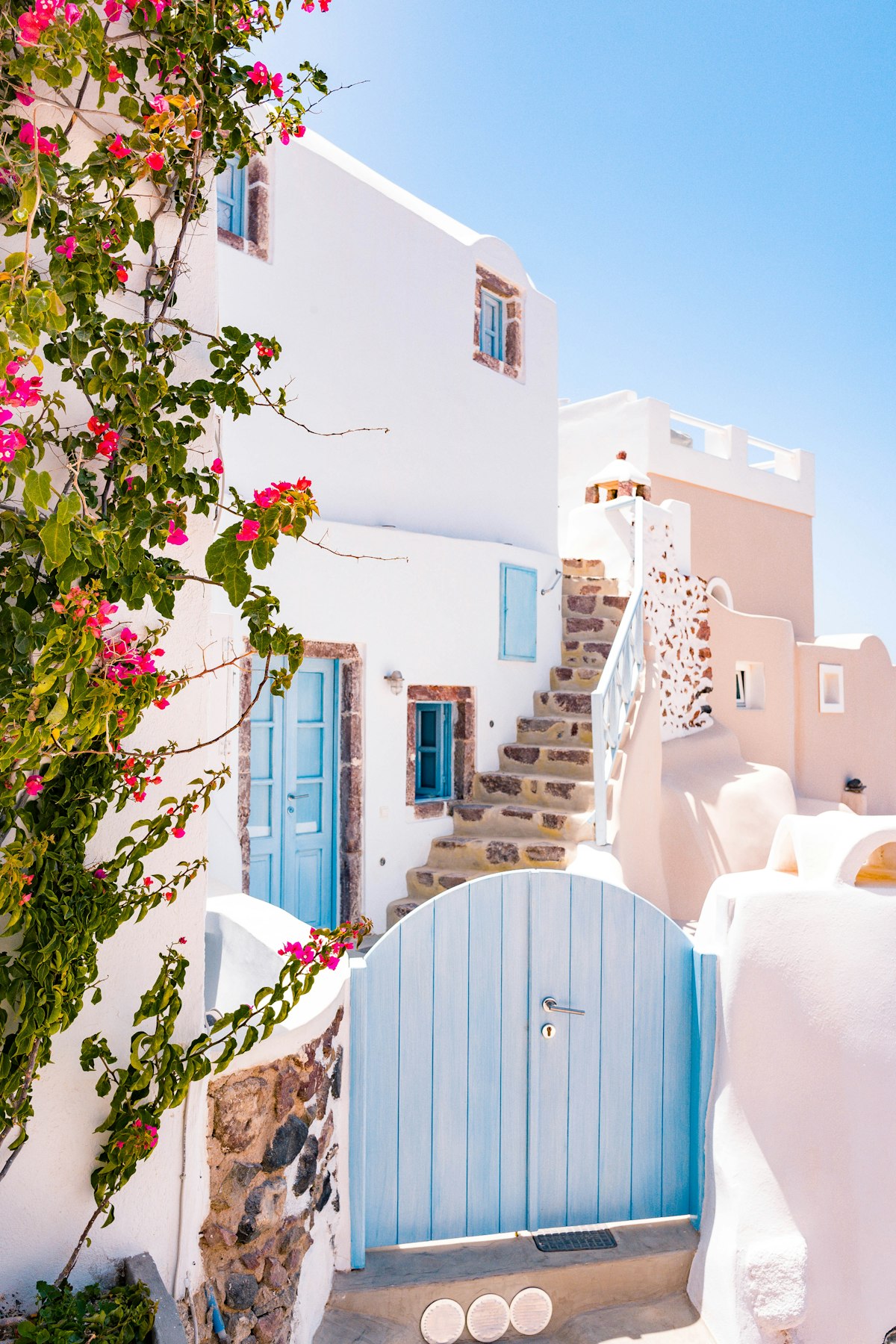
There is a moment, ascending the serpentine road from Atrani, when the Amalfi Coast's vertical geography performs its most dramatic revelation. The road climbs through chestnut woods, rounds a final curve, and suddenly the village of Ravello appears — perched 350 metres above the Tyrrhenian Sea on a limestone promontory that seems to exist at the precise altitude where the Mediterranean ceases to be a body of water and becomes a condition of light. André Gide, arriving in 1902, wrote that Ravello was "closer to the sky than to the shore." A century later, this observation has evolved from literary impression into real estate principle: Ravello's luxury proposition is fundamentally an argument about elevation — not merely physical, but cultural, aesthetic, and philosophical.
The Villa Rufolo Paradigm
The structure that defines Ravello's identity in the global luxury imagination is Villa Rufolo — a thirteenth-century palace whose Moorish-influenced architecture and terraced gardens have been attracting superlatives since Richard Wagner visited in 1880 and declared he had found the gardens of Klingsor, the enchanted domain of his opera Parsifal. The villa, built by the Rufolo family during Ravello's medieval prosperity as a maritime trading power, combines Norman, Arab, and Byzantine architectural elements in a sequence of towers, courtyards, and loggias that terminates in the famous Belvedere — a garden terrace cantilevered over the valley that offers what may be the most photographed panorama on the Italian coast.
Wagner's endorsement initiated a chain of cultural association that continues to define Ravello's brand: the villa's gardens now host the annual Ravello Festival, founded in 1953, whose summer concert series — performed on a stage suspended above the sea, with the coastline as backdrop — represents one of the most extraordinary intersections of music, architecture, and landscape in the European cultural calendar. When the Berliner Philharmoniker or the Orchestra dell'Accademia di Santa Cecilia performs at sunset on the Belvedere, the audience experiences a fusion of artistic and natural beauty that no concert hall, however acoustically perfect, can replicate. This is luxury as Wagner understood it: the total work of art, the Gesamtkunstwerk, achieved not through human engineering alone but through the collaboration of culture and geography.
Villa Cimbrone: The Terrace of Infinity
If Villa Rufolo provides Ravello's cultural narrative, Villa Cimbrone provides its aesthetic apotheosis. The Terrace of Infinity — a marble balustrade lined with eighteenth-century busts overlooking a 300-metre vertical drop to the sea — is often cited as the most beautiful viewpoint in Italy, a claim that, having stood there in early morning when the sea mist dissolves to reveal the coastline from Paestum to Capri, one finds difficult to contest. The villa itself, acquired and restored by the English lord Ernest William Beckett in the early 1900s, is now a five-star hotel whose gardens — a sequence of rose walks, classical temples, fern grottos, and a crypt with medieval frescoes — compose perhaps the finest private horticultural collection on the Italian coast.
The Cimbrone's transformation from private estate to luxury hotel illustrates a broader pattern in Ravello's evolution: the village's historic properties are too culturally significant and too expensive to maintain as private residences in the conventional sense, and have instead become the kind of ultra-luxury hospitality addresses where a night's stay functions as a compressed ownership experience. Palazzo Avino, the former Palazzo Sasso, offers a similar proposition — a twelfth-century noble palace converted into a Relais & Châteaux property whose coral-pink façade, vine-covered terraces, and infinity pool hovering above the coast represent the apotheosis of Amalfi Coast hotel luxury. Together, these properties establish Ravello as a destination where the hospitality experience is indistinguishable from the art-historical experience — where sleeping in a medieval palace is not a novelty but a continuation of eight centuries of aesthetic occupation.
The Literary Cartography
Ravello's luxury credentials have been continuously enriched by a literary tradition that has treated the village as both subject and sanctuary. D.H. Lawrence wrote portions of Lady Chatterley's Lover here in 1926; Virginia Woolf visited in 1927; Gore Vidal purchased a villa — La Rondinaia, "The Swallow's Nest" — on the cliff edge below Villa Cimbrone in 1972 and lived there for three decades, producing much of his later work in a study whose windows framed the same sea views that had inspired Wagner a century earlier. Vidal's presence attracted a constellation of literary and political visitors — Tennessee Williams, Italo Calvino, Hillary Clinton — that established Ravello as a village where intellectual celebrity and coastal beauty existed in a productive symbiosis rare even by Italian standards.
The sale of La Rondinaia after Vidal's death in 2012 for a reported €15M established a benchmark for Ravello real estate that continues to influence market expectations. The property's combination of literary provenance, architectural singularity — a modernist intervention grafted onto a medieval cliff — and absolute privacy created a category of luxury that transcends conventional real estate metrics. One does not buy La Rondinaia for its square metres or its bedroom count; one buys it for the privilege of occupying the same terrace where Gore Vidal entertained the twentieth century. This is the logic of Ravello luxury: cultural association as an asset class.
The Property Landscape
Ravello's real estate market is characterised by extreme scarcity, premium valuations, and a buyer profile that prioritises cultural motivation over investment return. The village's building stock is essentially medieval — the urban fabric was established between the eleventh and fourteenth centuries — and new construction is virtually impossible given the village's protected status and its location within the UNESCO-listed Amalfi Coast. The result is a market where supply is fixed, demand is international, and prices reflect not the cost of construction but the irreproducibility of place.
Properties in the historic centre — typically restored medieval houses of 100-300 square metres with terraces, gardens, and sea views — trade between €800,000 and €3M. Larger properties with significant gardens, swimming pools, and panoramic terraces command €3-8M, while the exceptional villas — cliff-edge estates with direct sea access, historic provenance, or architectural distinction — can exceed €10M. These are prices that rival Capri and Positano at the top end, but with a crucial distinction: Ravello's elevation and relative inaccessibility (the village has no beach and is reached only by a narrow mountain road) filter the visitor demographic toward a more culturally motivated and less transient population than the coastal towns below.
The Gastronomic Altitude
Ravello's cuisine operates at the intersection of coastal plenty and mountain austerity — a duality that produces some of the Amalfi Coast's most distinctive gastronomy. The limoni sfusato amalfitano — the elongated Amalfi lemon, grown on the terraced groves that cascade below the village — is the region's iconic ingredient, appearing in everything from risotto to the legendary limoncello that locals produce from family recipes. But Ravello's elevation brings mountain ingredients into the coastal repertoire: chestnuts from the forests of the Lattari Mountains, wild herbs gathered from limestone slopes, and the aged cheeses of the Monti Picentini that provide a savoury counterpoint to the coast's citrus-and-seafood vocabulary.
Restaurants like Rossellinis at Palazzo Avino (two Michelin stars) demonstrate that Ravello's gastronomic ambition matches its aesthetic aspirations. Chef Mimmo Di Raffaele's cuisine — technically precise, visually theatrical, and rooted in hyper-local ingredients — represents the Amalfi Coast's most sophisticated expression of the relationship between altitude, terroir, and plate. Dining on Rossellinis' terrace, with the Mediterranean darkening below and the stars emerging above the Lattari ridge, is to experience the convergence of gastronomic luxury and natural spectacle that defines Ravello's essential proposition.
The Verdict
Ravello's luxury proposition is ultimately an argument about the relationship between beauty and inaccessibility, between cultural density and physical elevation, between the permanence of stone and the transience of music played on a cliff-edge stage. In a Mediterranean luxury landscape increasingly dominated by marina developments, beach clubs, and resort infrastructure designed for volume, Ravello proposes an older, more demanding model: luxury as ascent, both literal and figurative, toward a place where the view is earned rather than provided, where the silence between concerts is as valuable as the music, and where the act of reaching the village — up that serpentine road, past the chestnut woods, around the final curve — is itself the first act of a luxury experience that has been unfolding for eight centuries. For those who understand this, Ravello is not merely the Amalfi Coast's most beautiful village. It is the argument against which all other coastal luxury must be measured.
Published by Italy Latitudes · Part of the Latitudes Media network