Ravello: How the Amalfi Coast's Clifftop Music City Became Southern Italy's Most Transcendently Positioned Luxury Address
March 2026 · 14 min read
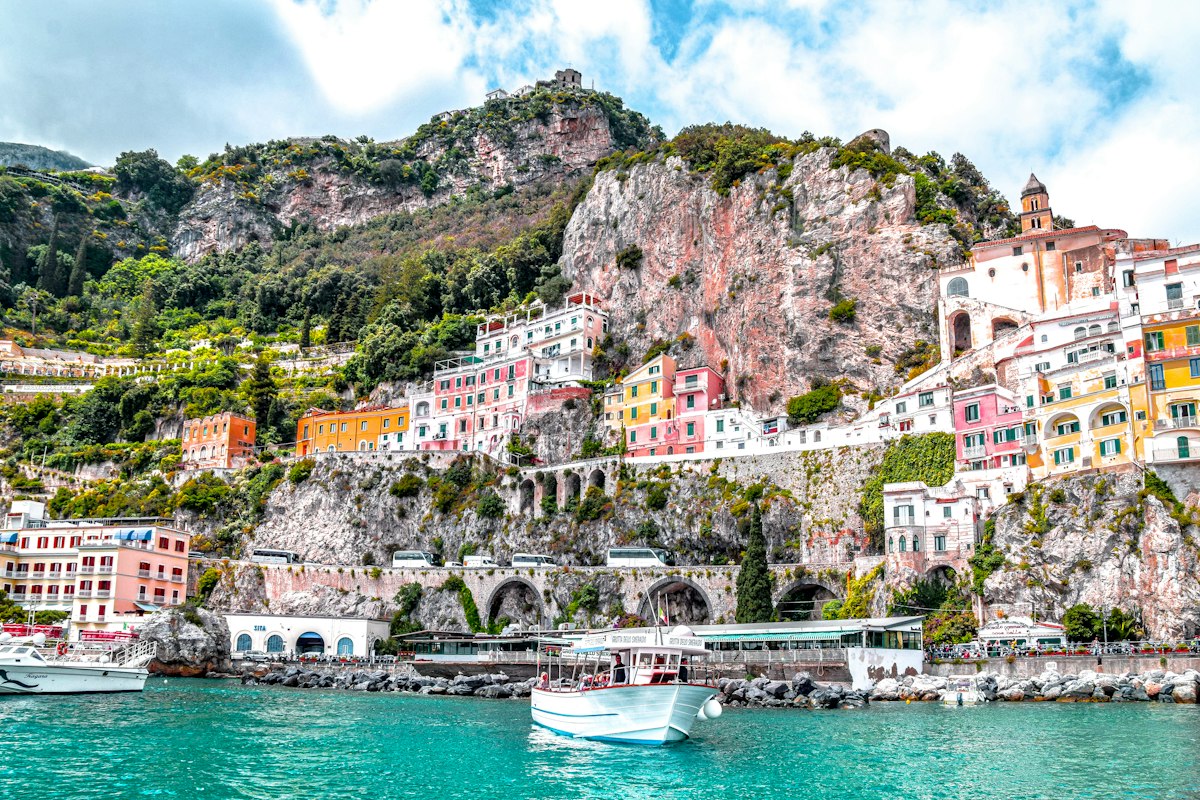
André Gide, arriving in Ravello in 1902, wrote that the town was "closer to the sky than the sea." It remains the most precise description anyone has managed. Perched 350 metres above the Tyrrhenian on a promontory that juts from the Lattari Mountains like the prow of a stone ship, Ravello occupies a position that is not merely elevated but transcendent — a place where the vertical distance from the water below creates a quality of light, silence, and perspective that the coastal towns of Amalfi, Positano, and Praiano, for all their considerable beauty, cannot replicate.
This is not hyperbole in the service of real estate marketing. It is the observation that has drawn composers, writers, and artists to Ravello for over a century — from Richard Wagner, who visited in 1880 and declared the gardens of Villa Rufolo the inspiration for the magical garden of Klingsor in Parsifal, to Gore Vidal, who purchased a clifftop villa in 1972 and spent three decades producing novels, essays, and memorably caustic dinner-party observations from a terrace that overlooked the entirety of the Gulf of Salerno.
The Wagner Legacy
Wagner's 1880 visit to Villa Rufolo — during which, according to the composer's own account, the sight of the gardens' Norman-Saracen architecture against the backdrop of the sea produced the vision that would become the second act of Parsifal — established a connection between Ravello and musical culture that has proven remarkably durable. The Ravello Festival, founded in 1953 and now one of southern Europe's most prestigious classical music events, programmes a summer season of orchestral concerts, chamber music, and opera that draws approximately 60,000 attendees across its June-to-September run.
The festival's signature venue — a temporary stage constructed annually on the belvedere of Villa Rufolo, with the audience seated beneath the medieval towers and the Tyrrhenian Sea providing a backdrop that no concert hall architect could plausibly design — has become one of the most photographed performance spaces in the world. For the residents and property owners of Ravello, the festival functions as both cultural amenity and social infrastructure: the after-concert dinners at Palazzo Avino, the aperitivi on the terrace of the Hotel Caruso, the encounters between international musicians and the community of writers, artists, and cultural patrons who constitute Ravello's permanent and semi-permanent population.
The Villa Market
Ravello's property market operates under constraints that are, in the context of the broader Amalfi Coast, unusually severe — and unusually favourable to existing owners. The town's medieval street plan, built on a terrain that drops precipitously in every direction, permits virtually no new construction. Building regulations, enforced by both the municipal administration and the Soprintendenza (the national authority responsible for heritage protection), effectively prohibit the demolition of existing structures and impose strict limitations on external modifications. The result is a property supply that is, for all practical purposes, fixed: the villas and palazzi that exist in Ravello today are, with minor variations in configuration, the properties that will exist in Ravello in fifty years.
Current pricing reflects this structural scarcity. A restored villa of 200 to 300 square metres with sea views — the standard Ravello trophy property — trades at €3 to €6 million, depending on view quality, terrace size, garden extent, and proximity to the Piazza Duomo. The most exceptional properties — those with 180-degree panoramas, private access paths, and the kind of terraced gardens that cascade down the hillside in successive levels of lemon trees, bougainvillea, and wisteria — command €8 to €15 million, placing them in the same bracket as prime Positano waterfront but with the added distinction of Ravello's elevation, privacy, and cultural cachet.
The buyer profile has shifted notably over the past decade. Where Ravello's property market was historically dominated by Italian buyers — Roman families seeking a southern alternative to Capri, Milanese industrialists with a taste for the culturally distinguished — international demand now accounts for an estimated 40 to 50 per cent of transactions. American buyers, particularly from the cultural and media industries on the East Coast, have become a significant presence, drawn by a combination of the festival's international reputation, the town's literary associations (Vidal's ghost is a more effective marketing tool than any real estate agent), and flight connectivity that now places Ravello within five hours of JFK via Naples International Airport.
The Hotel Benchmark
Ravello's two landmark hotels — Palazzo Avino (formerly the Palazzo Sasso) and the Belmond Hotel Caruso — function as the quality benchmarks against which the town's private villa market is implicitly measured. Palazzo Avino, a 12th-century palace converted to a hotel in 1997 and now operated with a precision that has earned it consistent placement among Italy's top ten hotels, demonstrates what can be achieved when medieval architecture meets contemporary luxury: rooms where original frescoes coexist with custom-commissioned furniture, terraces where breakfast is served against a panorama that encompasses 180 degrees of coastline, a Michelin-starred restaurant whose kitchen operates in what was once a vaulted wine cellar.
The Caruso, perched at Ravello's highest point in an 11th-century palace acquired by Belmond in 2005, goes further still. Its infinity pool — cantilevered over the cliff edge at 350 metres above the sea, appearing from certain angles to merge seamlessly with the horizon — has become perhaps the most recognisable hotel image in southern Italy. Room rates of €1,500 to €5,000 per night during the summer season establish a pricing context in which €15 million for a private villa with comparable views and year-round access appears, by the standards of the ultra-luxury market, rationally priced.
The Garden Culture
What distinguishes Ravello from every other luxury address on the Amalfi Coast — indeed, from almost every luxury address in the Mediterranean — is the centrality of gardens to its identity and daily life. The two great historical gardens, Villa Rufolo and Villa Cimbrone, are Ravello's primary cultural attractions, drawing approximately 500,000 visitors annually between them. But they are also the templates for a private garden culture that pervades the town's residential life.
The terraced garden — built on the narrow ledges of cultivable land that the Lattari Mountains' geology permits, sustained by stone retaining walls that in many cases date to the medieval period, planted with the heat-tolerant species (citrus, olive, wisteria, jasmine, rosemary) that constitute the Mediterranean garden's core vocabulary — is not merely an amenity in Ravello. It is the defining architectural element of the private villa, the space that mediates between the built structure and the vertiginous landscape, and the feature that buyers consistently identify as the primary determinant of a property's value and desirability.
The most significant Ravello gardens are maintained by dedicated gardeners — often the same families who have tended the terraces for generations, carrying knowledge of soil conditions, microclimate variations, and planting rhythms that is specific to individual properties and irreducible to horticultural manuals. When a villa changes hands, the garden's maintenance team frequently transfers with the property, a transaction-within-a-transaction that speaks to the garden's status as an organic, living component of the real estate rather than a decorative overlay.
The Altitude Advantage
Ravello's elevation delivers practical advantages that complement its aesthetic distinction. Summer temperatures run 3 to 5 degrees Celsius cooler than the coastal towns below — a differential that, in July and August when Amalfi and Positano bake under temperatures exceeding 35°C, transforms the quality of daily life. The breeze that moves through Ravello's streets and across its terraces is the product of the same thermal dynamics that sailors have exploited for centuries along this coast: air heated by the sun-warmed sea rises along the mountain face, creating a natural ventilation that functions more effectively than any mechanical system.
This climatic advantage extends to the garden culture. The slightly cooler temperatures and superior air circulation of Ravello's elevation reduce the disease pressure that affects coastal gardens, permitting a horticultural ambition that the humid, heat-trapped towns at sea level cannot easily sustain. The roses at Villa Cimbrone — a collection that includes over 200 varieties, many planted in the early 20th century by Lord Grimthorpe, the English aristocrat who purchased and restored the property — flourish at an altitude where their counterparts in Positano would struggle against black spot and mildew.
For a clifftop town founded by the Normans in the 11th century, Ravello's continued ascent in the Mediterranean luxury hierarchy feels less like a market trend than a fulfilment of geographic destiny. A place built closer to the sky than the sea was always going to attract those who preferred their luxury elevated — in every sense of the word.
Explore Italy
Discover Italy's most exclusive luxury addresses and lifestyle destinations.
← Back to Italy LatitudesPart of the Latitudes Media network — premium destination intelligence. Also explore Monaco, Dubai, and Portugal.