Pitigliano: How Tuscany's Most Impossibly Perched Tufa City Became the Maremma's Most Historically Layered Luxury Address
April 1, 2026 · 14 min read
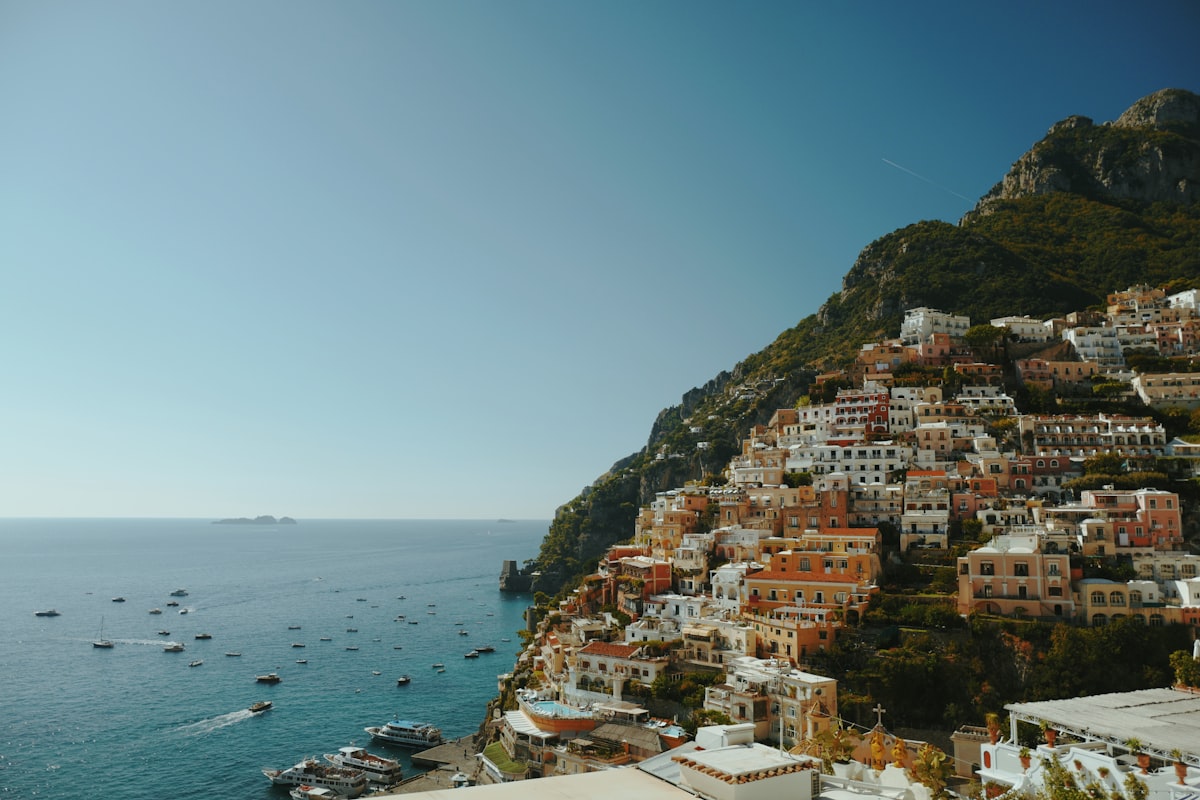
The first sight of Pitigliano produces an effect that photography consistently fails to reproduce. Approaching from the north along the SP127, the road rounds a final bend and reveals, with theatrical abruptness, an entire city suspended on a promontory of volcanic tufa — buildings rising directly from three-hundred-foot cliffs as though geology and architecture had entered into a pact that neither party could now dissolve. The houses are the same colour as the rock. The rock is the same material as the houses. Where construction ends and cliff face begins is, from a distance, genuinely impossible to determine. This is not a town built on a hill; it is a town that the hill became.
The Tufa Cities: A Geological Civilisation
Pitigliano belongs to a trio of settlements — with Sorano and Sovana — collectively known as the Città del Tufo, the Tufa Cities, located in the southern Maremma where Tuscany bleeds into Lazio. The tufa here is volcanic, deposited by eruptions from the Bolsena caldera approximately 300,000 years ago, and its properties are extraordinary: soft enough to carve with hand tools when freshly exposed, yet hardening to a durable stone upon weathering. This geological accident created a civilisation. The Etruscans carved necropoli, vie cave (sunken roads cut twenty metres deep through solid rock), and elaborate tomb chambers into the tufa. The Romans extended the infrastructure. The medieval inhabitants carved cellars, stables, cisterns, and entire underground quarters beneath their surface buildings. And the Jewish community, arriving in the fifteenth century, carved a synagogue, a ritual bath, a kosher bakery, and a wine cellar into the living rock beneath the ghetto — creating a parallel city underground that functioned, with quiet defiance, for five hundred years.
La Piccola Gerusalemme
Pitigliano's epithet — La Piccola Gerusalemme, Little Jerusalem — is not tourist marketing but historical fact. The Jewish community established itself here in the late fifteenth century, many of its members fleeing the Papal States' increasingly harsh restrictions. Under the relatively tolerant Orsini counts who governed the town, the community flourished to become, at its peak in the seventeenth and eighteenth centuries, one of the largest and most culturally significant Jewish populations in central Italy. The ghetto — a network of narrow streets in the town's southwestern quarter — contained a synagogue (rebuilt in 1598 and still standing), a ritual bath carved from the tufa, a kosher butcher, a matzoh bakery with its original oven, and a dye works whose vats remain visible in the underground chambers. The community's decline began with emancipation in the nineteenth century, when many families moved to larger cities, and was completed by the Fascist racial laws and the Holocaust, which reduced the population from approximately seventy to fewer than ten. Today, the restored Jewish quarter functions as both museum and memorial — a place where the physical infrastructure of a vanished community has been preserved with a precision that transforms archaeology into moral testimony.
The Vie Cave: Engineering Before Rome
The vie cave — Etruscan sunken roads carved through solid tufa, some reaching depths of twenty-five metres with walls so sheer they admit only a narrow strip of sky — are Pitigliano's most physically overwhelming archaeological feature. Their purpose remains debated: processional routes connecting settlements to necropoli, defensive corridors designed to channel invaders into killable bottlenecks, or sacred passages whose astronomical alignments suggest ritual function. What is not debatable is their scale. The Via Cava di San Giuseppe, the best-preserved example accessible from Pitigliano, extends for over a kilometre through rock that was excavated entirely by hand, creating a passage whose acoustic and atmospheric properties — the temperature drops, the sound dampens, the light reduces to a celestial slit — produce an experience more commonly associated with cathedral architecture than with road engineering. These are not ruins. They are spaces that function exactly as they were designed to function, two and a half thousand years after their creation.
The Orsini Aqueduct and Palazzo
The Orsini family, who governed Pitigliano from the thirteenth to the seventeenth century, left two monuments of enduring quality. The first is the aqueduct — a two-tiered structure of fourteen arches that spans the ravine on the town's northern approach, supplying a public fountain in the main square and simultaneously announcing, with architectural authority, that this cliff-top settlement is not a fortified village but a city with infrastructure. The second is the Palazzo Orsini itself, a fortress-residence whose expansion over four centuries produced a complex that is simultaneously medieval castle, Renaissance palazzo, and Baroque theatre — a building that embodies, in its accumulated architectural layers, the same temporal compression that characterises the town. The palazzo now houses the Museo Civico Archeologico, whose Etruscan collection contextualises the underground world that visitors are about to enter.
Wine, Oil, and the Bianco di Pitigliano
The tufa cellars beneath Pitigliano's buildings maintain a constant temperature of twelve to fourteen degrees Celsius throughout the year — conditions that the local winemakers recognised, long before the invention of climate-controlled storage, as ideal for vinification and ageing. The Bianco di Pitigliano DOC, one of Tuscany's oldest white wine designations (established 1966), is produced primarily from Trebbiano Toscano grown on the volcanic soils surrounding the town — soils whose mineral content imparts a flinty, almost saline quality that distinguishes these wines from the rounder, fruitier whites of northern Tuscany. The Sovana DOC, established in 1999, extends the appellation to reds, with Ciliegiolo — a grape variety that thrives on volcanic terrain — producing wines of surprising structural complexity. The combination of volcanic soil, tufa cellar, and microclimate creates a terroir proposition that oenologists increasingly compare, in mineralogical terms, to the volcanic wines of Etna and the Canary Islands.
The Real Estate Calculus
Pitigliano's property market reflects its geographical isolation and historical obscurity — which is to say, it represents one of the most significant value opportunities in Tuscan real estate. Apartments within the historic centre — typically featuring exposed tufa walls, vaulted ceilings, and underground cellar access — trade between €40,000 and €180,000, prices that in Chianti or the Val d'Orcia would not secure a parking space. Restored townhouses of three to four bedrooms, with panoramic terraces overlooking the gorge, range from €200,000 to €450,000. Agricultural properties on the surrounding plateau — combining olive groves, vineyard potential, and the haunting landscape of the tufa canyons — are available from €300,000 to €1.5 million for holdings of ten to thirty hectares. The buyer profile is overwhelmingly cultural: archaeologists, writers, artists, and retired professionals who have discovered, often through the vie cave or the Jewish quarter, that this corner of Tuscany offers an intensity of historical experience that the more famous destinations have diluted through popularity.
A City That Refuses Simplification
Pitigliano defeats the categories that organise Italian tourism. It is not a medieval hill town — its foundations are Etruscan, its underground is Jewish, its geology is volcanic, its agriculture is increasingly contemporary. It is not a museum — people live here, argue in the piazza, harvest grapes, attend mass in churches built over pagan temples. It is not undiscovered — the Lonely Planet era saw to that — but it remains genuinely uncompromised, its economy supported by agriculture and artisan production rather than by the tourist monoculture that has hollowed out comparable Tuscan settlements. What Pitigliano offers is complexity: a place where every surface conceals another surface, where walking down a street means walking over centuries of carved infrastructure, where the rock remembers what the buildings have forgotten. In a luxury market that increasingly values narrative density over superficial beauty, Pitigliano's proposition — twenty-five centuries of continuous habitation, visible in every carved wall and underground chamber — is unanswerable.