Ostuni: How Puglia's Luminous White City Became Southern Italy's Most Architecturally Intoxicating Luxury Address
April 4, 2026 · 16 min read
Ostuni announces itself from twenty kilometres away. Driving south from Bari on the SS16, the road crests a low rise between olive groves, and suddenly the city materialises on its hilltop — a dense, luminous mass of whitewashed buildings that seems less constructed than precipitated, as though the limestone plateau had spontaneously crystallised into habitable form. The effect is most pronounced in late afternoon, when the Adriatic light — reflected off the sea to the east and scattered by the fine calcareous dust that hangs permanently in the Puglian air — transforms the city into something that hovers between architecture and atmospheric phenomenon. This is not a metaphor. Ostuni's whiteness is not decorative; it is functional, historical, and, for those who have fallen under its spell, essentially addictive.
The Logic of Lime
The calce bianca — slaked lime — that covers every surface in Ostuni's centro storico was not originally applied for aesthetic reasons. During the medieval period, and with particular urgency during the plague years of the seventeenth century, the citizens of Ostuni discovered that coating their walls with lime served a dual purpose: it reflected the brutal southern Italian sun, reducing interior temperatures by as much as 8°C during the summer months, and its alkaline properties provided a degree of antibacterial protection. The practice, born of necessity, became tradition; tradition became identity; and identity, in the twenty-first century, became the basis of one of southern Europe's most compelling luxury propositions.
Today, the whitewashing of Ostuni is maintained not by public health ordinance but by something more powerful: communal aesthetic conviction. Property owners in the old town repaint their facades annually, typically in the spring, using the same calce formulation that their predecessors used in the 1600s. The result is a city that appears to regenerate itself — a settlement that, unlike the photogenically decaying medieval towns of Tuscany or Umbria, looks perpetually, almost impossibly fresh. This self-renewal is central to Ostuni's appeal among the international luxury buyers who have, over the past decade, transformed its property market from a sleepy southern Italian backwater into one of the Mediterranean's most intensely competitive real estate arenas.
The Centro Storico
Ostuni's old town occupies approximately 12 hectares atop a 225-metre hill, its street plan an organic labyrinth of vicoli, archi, and scalinate that resists cartographic representation. GPS navigation is useless here; Google Maps shows a tangle of unnamed grey lines that bear only approximate relationship to the actual pedestrian routes. This illegibility is, paradoxically, the old town's greatest luxury. In an era of algorithmic optimisation, of streets designed for autonomous vehicles and buildings engineered for maximum rentable floor area, Ostuni's centro storico offers something increasingly rare: spatial unpredictability.
Every walk through the old town produces discoveries. A courtyard garden, invisible from the street, glimpsed through a momentarily open door. A terrace, three storeys above the vicolo, where someone has arranged ceramic pots of basil and geraniums with the compositional precision of a Morandi still life. A church facade — Ostuni has twenty-three churches within its medieval walls — that reveals, on close inspection, a relief carving of such delicacy that art historians have attributed it to workshops associated with the Angevin court in Naples.
Property in the centro storico trades at between €2,500 and €4,500 per square metre — a fraction of comparable medieval-town prices in Tuscany, and roughly one-sixth of what equivalent addresses command in Positano or Monaco. But the comparison is misleading, because what you acquire in Ostuni's old town is not merely square metres but a spatial experience — a daily immersion in a built environment that operates according to pre-modern principles of proportion, light, and social organisation that no contemporary architect, however talented, can replicate.
The Masseria Renaissance
The masseria — the fortified farmhouse that is Puglia's most distinctive architectural typology — has undergone, in the past fifteen years, a transformation comparable to the châteaux of Bordeaux in the 1980s or the riads of Marrakech in the 2000s. What were, until recently, working agricultural properties — olive oil production, livestock, grain storage — have been acquired by a diverse cast of northern European aesthetes, Milan-based designers, and international hospitality operators and converted into private estates and boutique hotels of extraordinary refinement.
The countryside surrounding Ostuni contains perhaps the highest concentration of converted masserie in Puglia. Within a fifteen-kilometre radius of the city, there are at least forty properties that have been restored to standards that would satisfy the most exacting interior-design publication. The conversions share certain common elements: original tufa walls left exposed and treated with breathable mineral plasters; ceilings of original timber beams or barrel vaults; swimming pools — typically infinity-edge, positioned to frame views of the olive groves — that read as contemporary insertions into historical fabric rather than afterthoughts.
The most exceptional masserie achieve something that luxury hotels, for all their professional polish, cannot: they create the sensation of inhabiting history. When you wake in a masseria bedroom, your hand touching a stone wall that was laid by Messapian builders twenty-three centuries ago, the boundary between present comfort and past endurance becomes porous. You are not staying in a hotel room; you are occupying a position in a continuum. This temporal depth — this sense that your luxury is layered over millennia of agricultural labour, feudal governance, and communal survival — is what distinguishes Ostuni's masserie from the renovated farmhouses of Provence or the country estates of the Cotswolds.
The Olive Economy
Puglia produces approximately 40% of Italy's olive oil, and the groves that surround Ostuni contain some of the oldest productive trees in the Mediterranean basin. Individual specimens — gnarled, sculptural, their trunks contorted into forms that suggest geological rather than botanical processes — have been carbon-dated to ages exceeding 1,500 years. These trees are not merely agricultural assets; they are cultural monuments, protected by regional law and venerated by a population for whom the olive harvest remains the most significant annual event.
For luxury property buyers, the olive groves represent both an aesthetic asset and a productive investment. A well-maintained grove of 200 trees — a typical holding for a mid-range masseria — will produce between 2,000 and 4,000 litres of extra-virgin olive oil annually, with a market value of €15-25 per litre for estate-bottled, DOP-certified production. The economics are not transformative, but they provide something that purely residential properties cannot: a narrative. The owner of an Ostuni masseria is not merely a homeowner; they are a custodian of a productive landscape, a participant in an agricultural tradition that predates the Roman Republic.
The Coastal Dimension
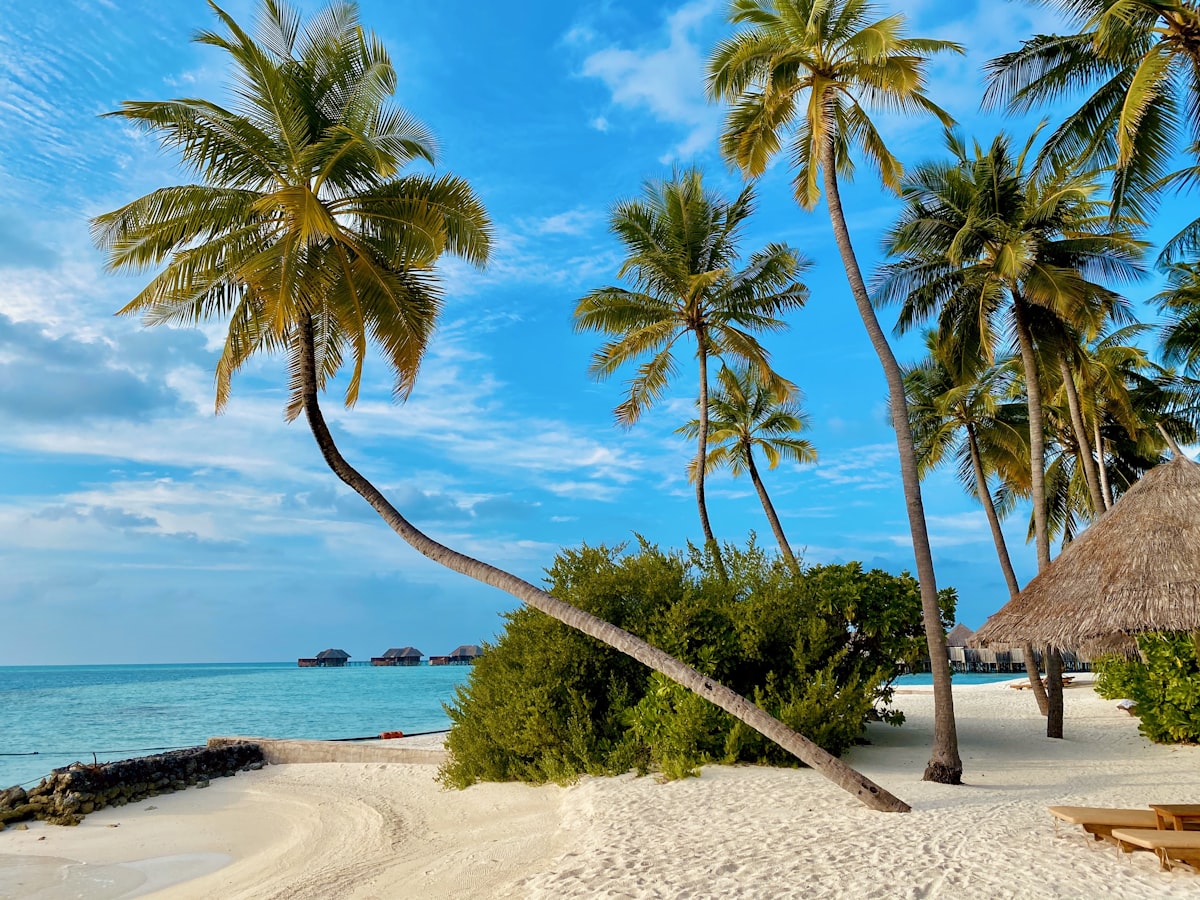
Ostuni sits eight kilometres from the Adriatic coast, and its designated marina — the Marina di Ostuni — provides access to some of the clearest, least developed coastline in mainland Italy. The beaches here are not the manicured, stabilimento-dominated strands of the Amalfi Coast or the Ligurian Riviera. They are wilder, less managed, backed by low dunes and Mediterranean macchia rather than by promenades and car parks. The water, filtered through the limestone karst that underlies the entire Puglian platform, achieves a transparency that snorkellers more typically associate with the Greek islands or the Croatian coast.
This coastal access — combined with the cultural richness of the hilltop city and the gastronomic abundance of the surrounding countryside — creates a triangulated lifestyle proposition that few Mediterranean destinations can match. In a single day, an Ostuni resident can breakfast in the centro storico's Piazza della Libertà, spend the morning at a near-deserted cove, lunch at a masseria restaurant on burrata made that morning from milk produced two fields away, and spend the afternoon exploring the baroque churches of Lecce, forty-five minutes to the south. This compression of experiences — urban, coastal, rural, cultural — within a geography small enough to navigate without a highway is Ostuni's ultimate luxury.
The Future of White
Ostuni's challenge, as international recognition grows and property prices rise, is to avoid the fate of those Mediterranean towns that have been loved into dysfunction — places where the permanent population has been priced out by holiday homes, where the centro storico empties in October and doesn't refill until Easter, where the restaurants serve to tourists what the locals used to cook for themselves. There are signs that Ostuni is managing this transition more successfully than most. The permanent population of the old town, while smaller than in the 1960s, remains stable. The weekly market — held every Saturday in the piazza below the cathedral — still serves locals as much as visitors. And the younger generation of Ostunesi, many of whom left for Milan or London in their twenties, are returning with professional skills and cosmopolitan perspectives that are enriching rather than displacing the town's cultural fabric.
The white city glows on its hilltop, as it has for centuries. The lime is fresh this spring, the olive groves are heavy with the promise of next autumn's harvest, and the Adriatic, visible from the cathedral terrace as a blue-silver line on the eastern horizon, continues to moderate the climate and illuminate the air with the particular coastal light that makes Ostuni's whiteness possible. The city endures — not as a museum, not as a resort, but as a living settlement that has discovered, almost by accident, that its medieval survival strategies constitute one of the twenty-first century's most compelling models of luxury.
Continue exploring Italy's most exceptional addresses
Discover Tropea's cliff-top drama, or explore luxury beyond Italy with Dubai Latitudes and Saint-Barth Latitudes.