Orvieto: How Umbria's Most Dramatically Perched Volcanic City Became Central Italy's Most Geologically Sublime Luxury Address
April 2, 2026 · 13 min read
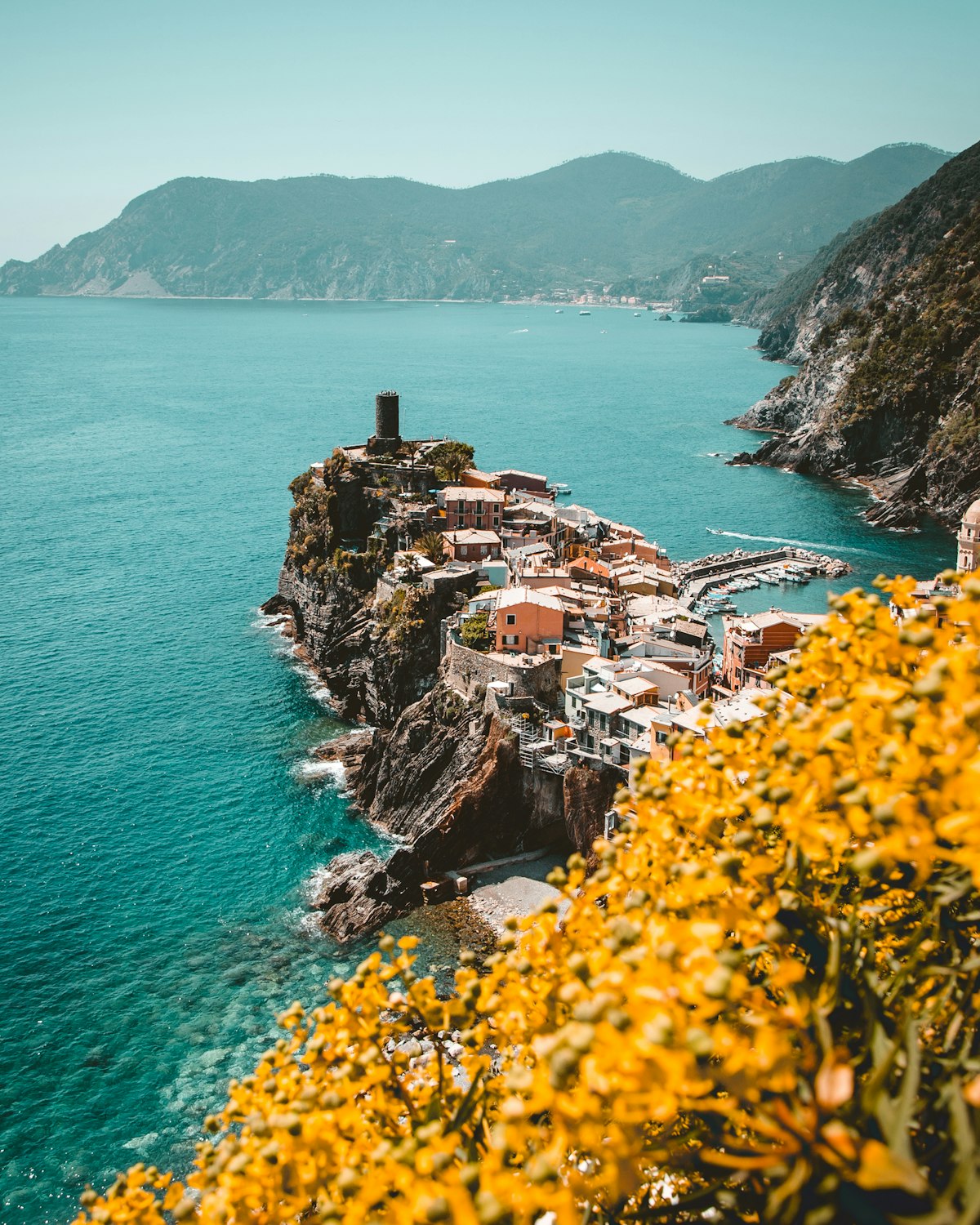
You see Orvieto before you understand it. Approaching from the south along the A1 autostrada, the city materialises abruptly from the Umbrian plain — a flat-topped mesa of volcanic tufa rising 60 metres above the surrounding farmland, its edges sheer, its summit crowned with a compressed skyline of towers, domes, and the unmistakable golden stripe of Italy's most beautiful cathedral façade. The effect is not picturesque. It is geological. Orvieto does not sit on a hill; it sits on a remnant of a volcanic eruption that occurred 300,000 years ago, a plug of solidified magma that resisted the erosion that wore away everything around it. The city exists because the rock was harder than time. There is something in that fact — that Orvieto's foundation is literally an act of geological defiance — that explains everything about the place: its confidence, its independence, its absolute refusal to be anything other than extraordinary.
The Cathedral: Italy's Most Perfect Façade
The Duomo di Orvieto was begun in 1290 and completed — in the sense that a building of this ambition is ever completed — over the following three centuries. Its façade is often described as the finest in Italy, and the description, for once, is not hyperbole. The west front is a symphony of golden mosaic, marble sculpture, and bas-relief that manages to be simultaneously monumental and intimate, overwhelming in its totality and endlessly detailed in its particulars. Lorenzo Maitani's four bas-relief panels, depicting the Creation, the Tree of Jesse, the Life of Christ, and the Last Judgement, are among the supreme achievements of Italian Gothic sculpture — carved with a delicacy and emotional precision that anticipate the Renaissance by a century. Inside, Luca Signorelli's frescoes in the Cappella di San Brizio (completed 1504) prefigure Michelangelo's Sistine ceiling in their muscular, tormented depiction of the Apocalypse — and were, by Michelangelo's own admission, a direct inspiration.
The cathedral's presence dominates the city not by size but by quality. It is relatively modest in scale — smaller than Florence's Duomo, shorter than Siena's — but its position at the summit of the tufa plateau, visible from every approach, gives it an authority that larger buildings in flatter cities cannot match. The building is the city's crown, its argument, its reason for existing. Everything in Orvieto's civic life — its processions, its festivals, its daily rhythms of passeggiata and caffè — orbits the cathedral as naturally as planets orbit a star.
The Underground: A City Beneath a City
Orvieto's most extraordinary architectural secret lies not above ground but below it. The tufa mesa on which the city sits is honeycombed with over 1,200 caves, tunnels, wells, and chambers excavated over 2,500 years — from the Etruscan period through the medieval era and into the Renaissance. The Orvieto Underground complex, accessible via guided tours, reveals a subterranean city of startling sophistication: Etruscan water systems, medieval olive presses, Renaissance pigeon roosts (the birds were a dietary staple), quarries that supplied the building stone for the structures above, and tunnels connecting key buildings for use during sieges. The Pozzo di San Patrizio (St Patrick's Well), commissioned by Pope Clement VII in 1527 as a water supply for the city during potential sieges, descends 53 metres into the tufa via two intertwined helical staircases — one for descent, one for ascent — that never intersect: a feat of Renaissance engineering that remains, five centuries later, breathtaking in its elegance.
For the contemporary luxury buyer, this underground dimension adds a layer of possibility that no other Italian city can offer. Several recent palace restorations in the historic centre have incorporated tufa caves — accessible from basement level — as wine cellars, spa spaces, and private museums. The caves maintain a constant temperature of 14–16°C year-round, require no climate control, and possess an acoustic isolation that makes them, in the words of one architect, "the quietest rooms in Italy." The combination of medieval palace above and Etruscan cave below creates a domestic experience of genuine uniqueness — a house that is simultaneously historical and geological, cultural and elemental.
The Wine: Orvieto Classico and Beyond
Orvieto's wine tradition is among the oldest in Italy — the Etruscans were fermenting Grechetto and Procanico grapes in the tufa caves two millennia before DOC regulations existed — and the city's modern wines have undergone a quiet revolution that mirrors its architectural renaissance. Orvieto Classico, traditionally a light, forgettable white, has been reimagined by a new generation of producers (Barberani, Palazzone, Decugnano dei Barbi) as a serious, terroir-driven wine of real complexity. The Superiore and late-harvest (muffa nobile) versions — golden, honeyed, oxidative — are now mentioned in the same conversations as Sauternes and Tokaji, at a fraction of the price. The surrounding countryside also produces excellent Sangiovese-based reds under the Rosso Orvietano DOC, and the emergence of natural and biodynamic producers has added a layer of artisanal credibility that attracts the same audience driving luxury interest in Etna, Jura, and the Canary Islands.
The Property Landscape
Orvieto occupies a singular position in the Italian luxury property market: close enough to Rome (90 minutes by car, 70 minutes by the high-speed Frecciarossa) to function as a weekend retreat, yet sufficiently remote to feel like a genuine escape. The historic centre, where building stock is limited by the plateau's physical boundaries, offers restored palazzi and townhouses at prices of €2,000–€3,500 per square metre — roughly half the equivalent in Spoleto or Perugia and a quarter of Florence or Siena. The surrounding countryside, a gently undulating landscape of vineyards, olive groves, and oak forests, presents casali (farmhouses) and poderi (agricultural estates) at equally rational prices, with the added advantage of panoramic views back to the tufa cliff and cathedral that are, by any measure, among the most dramatic residential vistas in central Italy.
The buyer profile is evolving. Where Orvieto once attracted primarily British and German retirees seeking affordable Umbria, the current market includes Roman professionals establishing weekend bases, Nordic families drawn by the region's climate and food culture, and a growing cohort of American buyers who have discovered — often through the food and wine press — that Umbria offers everything they love about Tuscany without Tuscany's prices, crowds, or self-consciousness. The presence of the American University's Orvieto program, which has operated since the 1980s, has created a small but culturally significant anglophone community that eases the transition for incoming international residents.
The Elevation Principle
Orvieto's luxury identity is, in the end, inseparable from its geology. The city's position — elevated, bounded, finite — creates a quality of urban experience that sprawling cities cannot replicate. You cannot build on Orvieto's plateau; there is no room. You cannot expand the old city; the cliff prevents it. You cannot arrive gradually; the funicular or the winding road delivers you, abruptly, from the plain below to the summit above. This compression — spatial, historical, experiential — is the source of Orvieto's intensity. Every street matters because there are so few of them. Every view is dramatic because the ground drops away on every side. Every stone is old because no new stone has been added in centuries.
This is the paradox of Orvieto as a luxury address: its limitations are its assets. The plateau's boundaries ensure that the city will never be overdeveloped. The tufa's porosity means the underground will always offer surprises. The cathedral's perfection means the aesthetic standard was set seven centuries ago and has never been lowered. To live in Orvieto is to inhabit a city that the earth itself has elevated — a place where geology, history, and architecture conspire to create something that cannot be replicated, relocated, or improved. It can only be occupied, gratefully, by those who understand that the rarest luxury is a city that was finished long ago and needs nothing from the present except appreciation.
Published by Italy Latitudes · Part of the Latitudes Media network. Explore more: Monaco · Dubai · Spain