Naples' Chiaia District: How Italy's Most Undervalued Waterfront Is Commanding €15,000/m²
March 17, 2026 · 14 min read
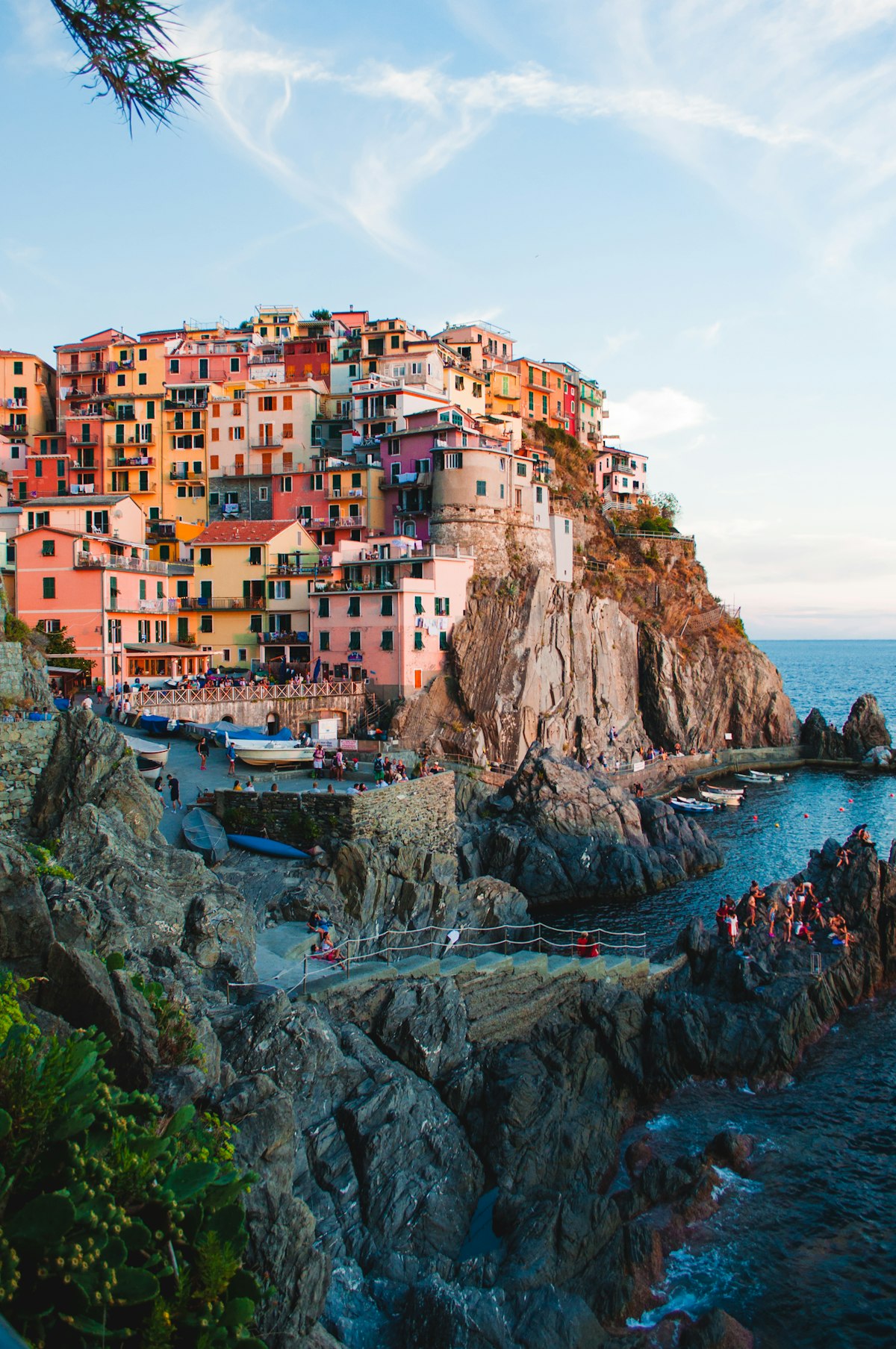
The elevator in the Palazzo Mannajuolo takes forty-five seconds to travel from the ground floor to the piano nobile, and in those forty-five seconds it passes through an Art Nouveau staircase so magnificent that Instagram accounts with millions of followers have been built around photographs of its helical geometry alone. The palazzo sits on Via Filangieri, Chiaia's principal artery — a street of nineteenth-century aristocratic residences that runs from the Piazza dei Martiri to the Riviera di Chiaia, the waterfront promenade where Naples meets the Tyrrhenian Sea. Three years ago, you could purchase an unrenovated apartment in this building — 200 square metres, double-height ceilings, original stucco, views of Capri — for €900,000. That apartment last traded in February 2026 for €2.4 million. Chiaia is not quietly appreciating. Chiaia is detonating.
The Bourbon Legacy
Chiaia's architectural distinction derives from a historical accident that proved, two centuries later, to be the neighbourhood's greatest asset. When Charles III of Bourbon arrived in Naples in 1734 to claim the throne of the Two Sicilies, he found a city whose eastern quarters — the Decumani, the Spaccanapoli — were densely built, magnificently chaotic, and entirely unsuitable for the kind of aristocratic residential development that a Bourbon monarch considered essential to the functioning of a proper capital. He turned west. The Chiaia district, named from the Neapolitan word for "beach," offered what the old city could not: wide streets, sea views, and enough undeveloped land to accommodate the palazzi, gardens, and equestrian facilities that the Bourbon court demanded.
The result was a neighbourhood designed, from its inception, for the wealthy. Via Chiaia, Via dei Mille, Via Calabritto, and Via Filangieri were laid out with the generous proportions of Parisian boulevards. The palazzi that lined them — Palazzo Cellammare, Palazzo Roccella, Palazzo Partanna — were built to aristocratic specifications: four-metre ceilings, marble staircases, interior courtyards with fountains and citrus trees, piano nobile apartments with enfilades of reception rooms that rivalled anything in Rome or Florence. When the Savoy dynasty unified Italy in 1861, Naples lost its status as a capital, and the Chiaia palazzi began their long, genteel decline. Aristocratic families subdivided apartments, deferred maintenance, and watched the neighbourhood's lustre fade behind accumulating patina.
The Correction
What the international luxury market is belatedly recognising is that Chiaia's decline was never structural — it was reputational. Naples' association with organised crime, dysfunction, and urban decay — an association that was always more caricature than reality, but devastatingly effective at suppressing property values — kept international capital away for decades. While comparable waterfront districts in European cities appreciated relentlessly (Barcelona's Barceloneta, Lisbon's Chiado, Marseille's Vieux-Port), Chiaia languished at prices that bore no relationship to the quality of its built environment, its climate, or its proximity to the most consequential archaeological and cultural heritage in the Western world.
The correction began around 2022, driven by three converging forces. First, the completion of Naples' Metro Line 1 — whose stations, designed by architects including Óscar Tusquets, Karim Rashid, and Álvaro Siza, transformed the city's international perception from "chaotic" to "culturally ambitious." Second, the Neapolitan gastronomy boom, catalysed by the global elevation of pizza and Campanian cuisine from street food to serious gastronomy, which brought a wave of high-spending culinary tourists who discovered a city vastly more beautiful and functional than its reputation suggested. Third, and most consequentially, the remote-work revolution, which decoupled income from geography and allowed a generation of high-earning professionals to ask a question that would have been inconceivable a decade earlier: why not live in Naples?
The Numbers
Chiaia's price trajectory is, by any measure, extraordinary. According to Idealista data compiled by Knight Frank Italy, the average price per square metre for premium residential in Chiaia rose from €4,200 in 2020 to €8,900 in 2024 — a 112% increase over four years. But the headline average understates the movement at the top of the market. Renovated piano nobile apartments in historic palazzi are transacting at €12,000-15,000/m², with exceptional properties (sea views, private terraces, original frescoes) exceeding €18,000/m². These are remarkable figures for Naples, but they remain a fraction of comparable product in Rome (Parioli: €10,000-14,000/m²), Milan (Brera: €12,000-18,000/m²), or Florence (Oltrarno: €8,000-12,000/m²) — which means the value gap, while narrowing, still offers significant upside.
Transaction volumes tell an equally compelling story. The number of residential sales above €1 million in Naples' first municipality (which encompasses Chiaia, Posillipo, and the waterfront) increased from 23 in 2021 to 89 in 2025. International buyers now represent 35% of transactions above €1.5 million, up from 8% in 2020. The buyer nationalities are revealing: Americans lead (attracted by the dollar-euro exchange rate and Italy's flat-tax regime for foreign income), followed by Northern Europeans (British, Scandinavian, Dutch), and a small but growing cohort of Japanese and South Korean buyers drawn by Naples' cultural capital.
The Culinary Anchor
Chiaia's gastronomic density is now, objectively, one of the highest in Italy. Within a fifteen-minute walk of the Piazza dei Martiri, you can eat at three Michelin-starred restaurants (George, inside the Grand Hotel Parker's; Veritas, in Via Gerolimini; and the newly starred Aria, chef Antonio Tubelli's seafood laboratory on the Riviera di Chiaia), twelve Bib Gourmand addresses, and at least thirty establishments that would qualify for a star in a less competitive market. The neighbourhood's trattorias — Da Dora for seafood, Trattoria dell'Oca for Neapolitan classics, Tandem for ragù that has been simmering since the Bourbon era — are culinary monuments in their own right, preserved not by nostalgia but by the daily patronage of residents who regard inferior food as a moral failing.
The pizzerias deserve separate mention. Chiaia contains four of Naples' top-twenty pizzerias according to the Gambero Rosso guide, including 50 Kalò (master pizzaiolo Ciro Salvo's temple to Neapolitan dough) and Diego Vitagliano's Via Toledo outpost, where the fried pizza — a Chiaia tradition — achieves textures that border on the metaphysical. The proximity of this gastronomic infrastructure to the residential market is not incidental to Chiaia's luxury appeal — it is constitutive. For the buyer who values daily beauty, effortless culture, and food that justifies the existence of taste buds, Chiaia offers a quality of life that no other Italian city can match at this price point.
Posillipo and the Coastal Extension
Chiaia's luxury market does not end at the neighbourhood's western boundary. It extends along the coast to Posillipo, the volcanic headland that separates the Bay of Naples from the Bay of Pozzuoli, and which contains some of the most spectacular residential positions in the Mediterranean. Posillipo's villas — many built in the Liberty (Italian Art Nouveau) style at the turn of the twentieth century — occupy terraced gardens that cascade down the cliff face to private beaches and boat moorings. The views encompass Vesuvius, Capri, Ischia, Procida, and the entire sweep of the Neapolitan coastline. A fully renovated Posillipo villa with private sea access and 3,000 square metres of garden will command €5-8 million — a price that would purchase a modest apartment in Cap-Ferrat or Positano.
The Investment Case
Chiaia's investment thesis rests on a simple observation: this is the last major waterfront district in a Tier 1 European cultural city where luxury residential remains fundamentally underpriced relative to its intrinsic qualities. The built environment is superior to most of what Lisbon, Barcelona, or Marseille can offer. The climate is warmer and more consistent than any Northern Mediterranean rival. The cultural infrastructure — the Museo di Capodimonte, the National Archaeological Museum, the Teatro di San Carlo (Europe's oldest opera house) — is, pound for pound, the richest in Italy. The cuisine is, by growing critical consensus, the best in the world. And the prices, while rising rapidly, still offer value gaps of 40-60% compared to peer cities.
The risk factors are real but diminishing. Naples' bureaucratic environment remains challenging (permit timelines for major renovations average eighteen months). Crime statistics, while dramatically improved, still exceed Northern Italian averages. And the rental market regulation, governed by Italy's byzantine tenant-protection laws, complicates yield optimisation. But for the buyer with a five-to-ten-year horizon, the trajectory is unmistakable. Chiaia is not a speculation — it is a reversion to the mean, the delayed recognition of a neighbourhood that has always possessed the fundamentals of a world-class luxury address and is only now being priced accordingly.
Naples never lost its beauty. The world simply took two centuries to remember where to look.