Modena: How Emilia-Romagna's Most Ingeniously Creative City Became Italy's Undisputed Capital of Velocity, Vinegar, and Culinary Perfection
April 1, 2026 · 13 min read
There are cities celebrated for their culinary traditions, cities famous for their automotive heritage, and cities revered for their artisanal craft. Modena is the singular place where all three converge with such intensity that the distinction between them dissolves entirely. This unassuming Emilian city of 185,000 inhabitants — overshadowed for centuries by neighbouring Bologna in the popular imagination — has become, in the twenty-first century, arguably the most creatively concentrated luxury destination in Italy. It is the city where Enzo Ferrari built his first factory, where Massimo Bottura reimagined Italian cuisine, and where families have been aging balsamic vinegar in attic batterie for longer than some European nations have existed. That these three traditions coexist in the same modest urban footprint is not coincidence; it is the expression of a regional temperament that prizes ingenuity above display and substance above spectacle.
Motor Valley: Engineering as Art
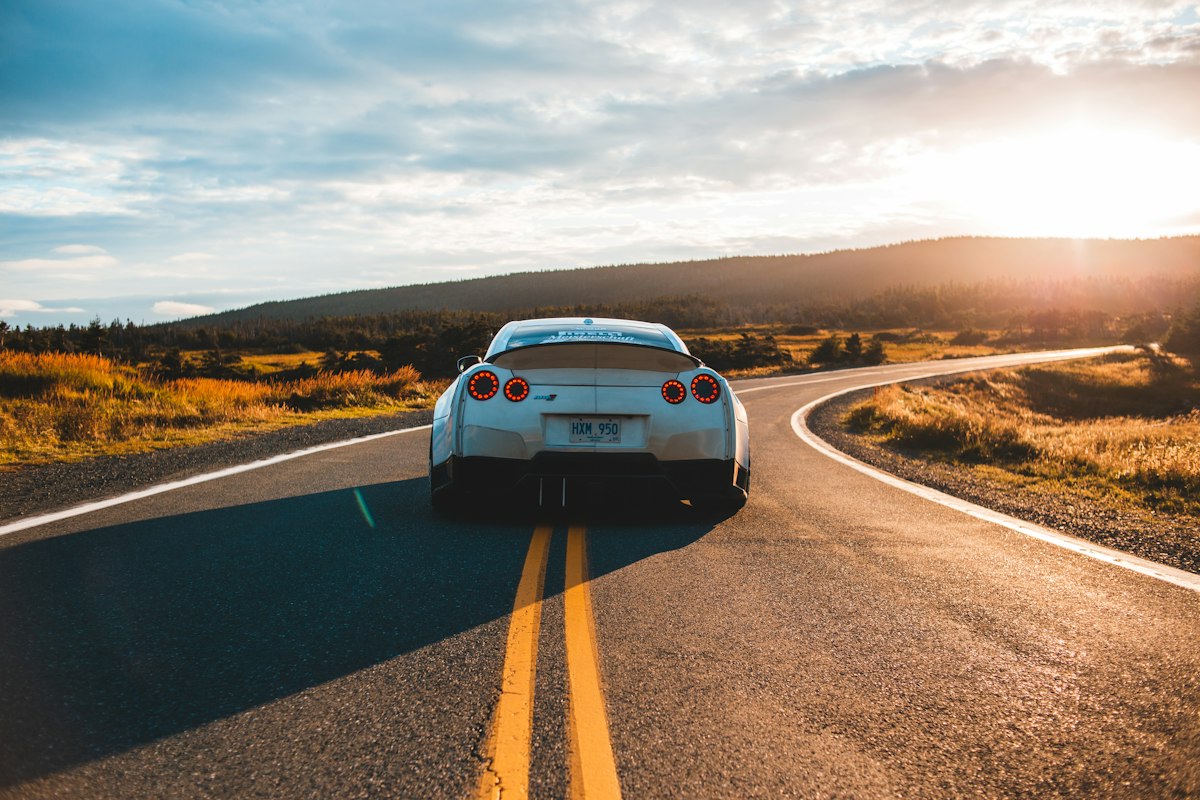
The stretch of the Via Emilia between Modena and Maranello — a distance of barely seventeen kilometres — contains the highest concentration of luxury and performance automotive marques in the world. Ferrari's headquarters, museum, and factory complex in Maranello remain the spiritual centre of this ecosystem, but the constellation extends to Lamborghini in Sant'Agata Bolognese, Maserati's historical home in Modena itself, Pagani in San Cesario sul Panaro, and Dallara in Varano de' Melegari. This is not a heritage trail preserved in amber; it is a functioning industrial ecology where approximately 16,000 people are employed in the design, engineering, and assembly of vehicles that represent the absolute pinnacle of automotive achievement. The Enzo Ferrari Museum in Modena — designed by Jan Kaplický in a sinuous yellow aluminium shell that wraps around the house where Ferrari was born in 1898 — contextualises this tradition not as nostalgia but as an ongoing experiment in the relationship between mechanical engineering and aesthetic beauty. Visitors who arrive expecting showroom polish discover instead a narrative about obsessive iteration, catastrophic failure, and the peculiarly Emilian conviction that speed and beauty are morally equivalent.
Aceto Balsamico Tradizionale: Time as Ingredient
Modena's balsamic vinegar tradition — the authentic tradizionale, not the industrial simulacrum sold in supermarkets worldwide — represents one of the most extraordinary intersections of agriculture, chemistry, and patience in the culinary world. The process begins with Trebbiano or Lambrusco grape must, cooked slowly over open flame, then transferred to a batteria — a series of progressively smaller barrels made from different woods (oak, chestnut, cherry, juniper, mulberry) — stored in the attics of private homes, where the extreme temperature variations between summer and winter drive a decades-long process of evaporation, concentration, and microbial transformation. The minimum aging for the tradizionale designation is twelve years; the extravecchio requires twenty-five. Some families maintain batterie that are over a century old, their contents representing an unbroken genealogy of flavour that connects the present to grandparents and great-grandparents who initiated the process. A hundred-millilitre bottle of extravecchio — enough to last a serious cook several months — commands prices between €150 and €400, and the economics are instructive: the product cannot be accelerated, scaled, or replicated. It is, in the strictest sense, irreplaceable time made liquid.
Osteria Francescana and the New Modenese Gastronomy
When Massimo Bottura opened Osteria Francescana on Via Stella in 1995, Modena was a prosperous but gastronomically conservative city, proud of its traditional cuisine — tortellini in brodo, zampone, gnocco fritto — but resistant to the kind of creative reinterpretation that Bottura proposed. His early years were marked by local scepticism bordering on hostility. That the restaurant eventually accumulated three Michelin stars and was twice named the world's best restaurant is well documented; less frequently noted is the transformative effect on the city itself. Bottura's success catalysed a generation of younger chefs and food entrepreneurs who have made Modena's historic centre one of the most gastronomically interesting square kilometres in Europe. The Mercato Albinelli — the city's covered market, operating since 1931 — now functions as both a working food market and a curated showcase of regional producers whose quality standards have been elevated by the global attention Bottura brought. The city that once resisted culinary innovation now defines it.
The Romanesque Cathedral and Piazza Grande
Modena's Duomo, begun in 1099 by the architect Lanfranco and the sculptor Wiligelmo, is a UNESCO World Heritage Site that represents the finest achievement of Romanesque architecture in the Po Valley. Wiligelmo's Genesis reliefs on the western façade — depicting the creation of Adam and Eve, the Fall, and the expulsion from Eden — are carved with a narrative energy and psychological complexity that anticipate the Renaissance by four centuries. The adjacent Ghirlandina tower, completed in its present form in the fourteenth century, rises 86 metres and provides the vertical axis around which the city's entire urban identity is organised. The Piazza Grande, which these structures define, is not a monumental space in the Roman or Baroque tradition; it is an intimate civic room, scaled to conversation rather than ceremony, where the Tuesday and Saturday markets have operated continuously since the medieval period. The square's proportions — just large enough to feel public, just small enough to feel inhabited — exemplify the Emilian genius for creating environments that balance formality with warmth.
The Galleria Estense: A Ducal Collection Intact
The Galleria Estense, housed in the Palazzo dei Musei, preserves the art collection assembled by the Este dynasty during their five centuries of rule over Modena. Unlike many Italian princely collections, which were dispersed through sales, theft, or Napoleonic confiscation, the Este holdings remain substantially intact — a circumstance that gives the gallery a coherence and biographical quality that larger, more famous institutions often lack. The collection includes works by Velázquez, El Greco, Correggio, Guercino, and the Carracci family, as well as one of the most important collections of musical instruments in Europe and an exquisite series of illuminated manuscripts. The gallery's relative obscurity — it receives a fraction of the visitors of comparable collections in Florence or Rome — is both its limitation and its luxury. Visitors experience these works in conditions of silence and proximity that have become impossible in the major museums, an intimacy that transforms viewing from tourism into genuine encounter.
Lambrusco: The Most Misunderstood Wine in Italy
No Italian wine has suffered more from its own commercial success than Lambrusco. The sweet, fizzy, mass-produced version exported in the 1970s and 1980s — bearing approximately the same relationship to authentic Lambrusco as industrial balsamic bears to the tradizionale — created a reputation for frivolity that serious producers have spent decades dismantling. The authentic Lambruscos of the Modena appellation — Lambrusco di Sorbara, Lambrusco Grasparossa di Castelvetro, Lambrusco Salamino di Santa Croce — are dry, complex, deeply coloured wines produced using the ancestrale method of refermentation in bottle, creating a natural effervescence that carries flavours of violet, dark cherry, and the iron-rich Emilian soil. Producers like Cleto Chiarli (established 1860), Vittorio Graziano, and Paltrinieri have demonstrated that Lambrusco, properly made, is one of Italy's great gastronomic wines — the ideal companion to the rich, fatty, pork-based cuisine of Emilia. A region that produces both the best sparkling red wine and the best cured pork products in the world has an intuitive understanding of complementarity that extends beyond the table.
The Real Estate Equation
Modena's property market offers what may be the most compelling value proposition in northern Italy for culturally motivated buyers. Restored apartments in the historic centre — within walking distance of the Duomo, the Galleria Estense, and Osteria Francescana — trade between €2,500 and €4,500 per square metre, roughly half the equivalent in Bologna and a quarter of Milan. Period palazzi with frescoed ceilings and internal courtyards appear occasionally at prices between €800,000 and €3 million — sums that would purchase a modest apartment in Florence's centro storico. The surrounding countryside, where the flat alluvial plains of the Po Valley begin to rise toward the Apennine foothills, offers agricultural estates combining Lambrusco vineyards, Parmigiano-Reggiano production rights, and the rolling landscape that defines Emilian identity, at prices between €2 million and €8 million for substantial holdings. The buyer profile is sophisticated and typically Italian or northern European: individuals who understand that Modena's apparent modesty conceals a density of cultural and gastronomic achievement that few cities of any size can match.
The Emilian Formula
What distinguishes Modena from Italy's more celebrated luxury destinations is the absence of any gap between production and display. In Florence, the artisan tradition is increasingly performed for visitors in workshops that function as retail theatre. In Milan, luxury is consumed rather than created. Modena continues to make things — cars, vinegar, cheese, wine, cuisine — at the highest level of quality, and the making is not hidden behind factory walls but integrated into the civic fabric. You can watch Parmigiano-Reggiano being formed in the same dairies that have operated since the thirteenth century. You can visit the acetaia where a family's balsamic has been aging since the Risorgimento. You can stand at the fence in Maranello and hear engines being tested on the Fiorano circuit. This integration of production and daily life — the refusal to separate what is made from where it is lived — is Modena's most distinctive luxury characteristic, and it is one that cannot be curated, designed, or imported. It can only be sustained, generation after generation, by a city that has always understood that excellence is not a destination but a practice.