Lecce: How Puglia's Baroque Capital Became the Salento's Most Architecturally Intoxicating Luxury Address
March 19, 2026 · 15 min read
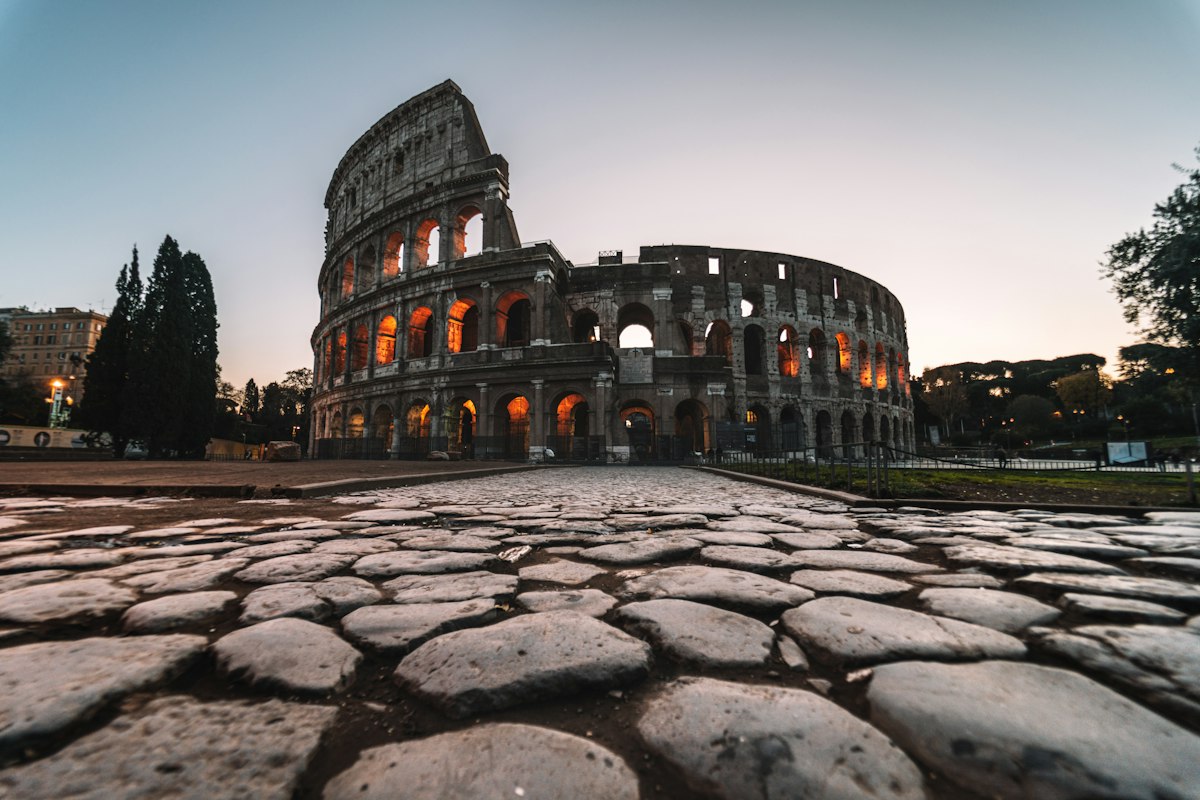
The first thing you notice about Lecce is the light. Not the generic Mediterranean luminosity that tourist boards promise for every south-facing coastline, but something more specific — a warm, amber radiance that seems to emanate from the buildings themselves. This is not an illusion. Lecce's historic centre is constructed almost entirely from pietra leccese, a local limestone so soft when quarried that artisans can carve it with hand tools, so pale that it captures and re-emits sunlight like a geological lantern. Over centuries, this stone acquires a honeyed patina that transforms the city's baroque facades into something between architecture and sculpture — buildings that appear to have been modelled rather than built, their surfaces alive with putti, garlands, scrollwork, and fantastical creatures that seem perpetually on the verge of detaching themselves from the stone and taking flight.
The Florence of the South
The epithet is overused but, in Lecce's case, earned. Between the late sixteenth and mid-eighteenth centuries, Lecce experienced a building frenzy driven by competing religious orders, noble families, and civic authorities, each seeking to outdo the others in ornamental extravagance. The result is a concentration of baroque architecture that rivals — some scholars argue surpasses — anything in Rome, Catania, or Noto. The Basilica di Santa Croce, whose facade took 150 years to complete, displays a density of sculptural decoration that borders on the hallucinatory. The Piazza del Duomo, one of Italy's most perfectly enclosed civic spaces, achieves a theatrical unity that makes Bernini's colonnade at St. Peter's look almost restrained by comparison.
For the luxury real estate market, this architectural patrimony creates an asset class with no parallel in contemporary Italy. A restored palazzo in Lecce's centro storico — typically 400–800 square metres across three or four floors, with a private courtyard, piano nobile with original frescoed ceilings, and rooftop terrace commanding views across a skyline of domes and bell towers — commands between €1.5M and €4.5M. These are prices that would secure a two-bedroom apartment in Milan's Brera district or a modest townhouse in Florence's Oltrarno. In Lecce, they purchase a building of genuine architectural significance, in a city whose historic centre has been restored with exceptional sensitivity over the past two decades, at a latitude that guarantees 300 days of sunshine annually.
The Masseria Renaissance
Beyond Lecce's city walls, the Salento's agricultural landscape has undergone its own luxury transformation. The masseria — Puglia's fortified farmhouse, typically constructed between the sixteenth and eighteenth centuries as combined residence, olive oil production facility, and defensive stronghold — has emerged as one of the Mediterranean's most distinctive property typologies. At their most basic, these are massive stone structures surrounded by ancient olive groves, with walls thick enough to maintain comfortable interior temperatures without air conditioning and courtyards large enough to accommodate swimming pools, outdoor dining for twenty, and the kind of scale that makes northern European country houses look cramped.
The restoration economics are compelling. A derelict masseria on five hectares of olive-planted land can be acquired for €300,000–€600,000. A sympathetic restoration — preserving the original vaulted ceilings, stone floors, and external massing while introducing contemporary comforts — typically costs €2,000–€3,500 per square metre, bringing the total investment for a 500-square-metre property with pool, guest house, and landscaped grounds to €1.5–€2.5M. The finished product — a private estate with the spatial generosity of an English country house, the climate of North Africa, and the gastronomic culture of southern Italy — represents, by any rational calculus, one of the most compelling value propositions in European luxury real estate.
The Hospitality Laboratory
Lecce's emergence as a luxury destination has been catalysed by a generation of boutique hoteliers who have demonstrated the commercial potential of the Salento's architectural patrimony. Palazzo BN, a twelve-suite hotel occupying a restored seventeenth-century palace, achieves summer rates of €800–€1,400 per night and maintains occupancy above 85% from May through October. La Fiermontina, an urban resort carved from a chain of interconnected historic buildings near the Piazza del Duomo, has established a template for the "urban masseria" concept — combining the spatial generosity and agricultural aesthetics of rural Puglia with the walkability and cultural density of a historic city centre.
These properties have accomplished something that Puglia's tourism boards spent decades failing to achieve: they have made the Salento legible to an international luxury audience. The guest who spends a week at Palazzo BN, who dines at Bros' (the Lecce restaurant that earned Puglia's first Michelin star for contemporary cuisine), who visits the MUST contemporary art museum housed in a former monastery, and who takes a day trip to the crystalline waters of Porto Cesareo or the dramatic sea caves of Castro — this guest leaves with a mental model for Lecce as a luxury destination that is both coherent and compelling.
The Two-Coast Advantage
The Salento peninsula — the heel of Italy's boot, roughly 100 kilometres long and 40 kilometres wide — possesses a geographic advantage unique in the Mediterranean: it is simultaneously Adriatic and Ionian. The eastern coast, facing Albania and Greece, offers rocky coastlines, sea stacks, and underwater caves that draw comparison with Croatia's Dalmatian shore. The western coast, facing the open Ionian Sea, delivers long sandy beaches, shallow turquoise waters, and a laid-back seaside culture that evokes the Greek islands without their overcrowding or their infrastructure limitations.
Lecce sits at the peninsula's centre, equidistant from both coasts — a 30-minute drive to either shore. This dual-coast access means that a property in or near Lecce offers its owner not one but two distinct marine environments, each with its own character, each accessible for a morning swim or an afternoon sail. It is as if Florence sat not in the Arno valley but on a narrow peninsula flanked by the Amalfi Coast on one side and the Cinque Terre on the other.
The Connectivity Evolution
Lecce's principal historical limitation — its remoteness — is dissolving. Brindisi airport, 35 minutes north, now receives direct flights from London, Paris, Berlin, Munich, Milan, Rome, and a dozen other European cities, with seasonal frequency that approaches year-round service. The high-speed rail link from Rome, which currently delivers passengers to Lecce in approximately five hours, is being upgraded to reduce journey times to under four hours by 2027. Private aviation operators report a 340% increase in Salento-bound charter flights since 2020, driven by the same post-pandemic recalibration of lifestyle priorities that has benefited Portugal's Alentejo, Greece's Peloponnese, and Spain's Asturias.
The infrastructure investment extends to the hospitality ecosystem. A Four Seasons resort is under construction on the Adriatic coast near Otranto. Soho House has announced plans for a masseria conversion near Ostuni. Aman scouts have been spotted in the countryside around Gallipoli. For the luxury property buyer, this institutional validation serves as both confirmation of the market's trajectory and insurance against the risk of investing in a destination that might not sustain its momentum.
The Gastronomic Argument
In the hierarchy of Italian regional cuisines, Puglia's has historically occupied a paradoxical position: universally praised by those who have experienced it, chronically underrepresented on the international stage. The cuisine is built on an agricultural foundation of extraordinary quality — olive oil from trees that have been producing for five centuries, tomatoes sun-dried on stone walls, burrata and mozzarella from dairies that measure their output in hundreds rather than thousands of kilograms per day, seafood pulled from waters that remain unpolluted because the Salento's economy never industrialised enough to contaminate them.
For the luxury buyer evaluating competing Mediterranean destinations, the gastronomic argument is decisive. Puglia's food culture delivers the ingredient quality of Tuscany, the sea-to-table freshness of the Greek islands, and the convivial social rituals of southern Spain, at price points that make comparable experiences elsewhere feel exploitative. A dinner for two at one of Lecce's finest restaurants — multi-course, wine-paired, served on a candlelit terrace overlooking a baroque piazza — rarely exceeds €150. The same experience in Portofino, Saint-Tropez, or Mykonos would command four times that figure.
The Future Architecture
Lecce's luxury evolution is entering a phase that will determine whether the city joins the permanent roster of Mediterranean luxury addresses or remains a connoisseur's secret. The signals are contradictory. On one hand, property prices are rising at 8–12% annually, international buyer interest is intensifying, and the hospitality infrastructure is approaching critical mass. On the other hand, Lecce retains the qualities — walkability, authenticity, human scale, affordable daily life — that attracted its first wave of luxury buyers, and these qualities are inherently fragile in the face of rapid commercialisation.
The city's greatest asset may be its most counterintuitive one: its distance from perfection. Lecce's streets are occasionally chaotic, its bureaucracy is authentically Italian, its nightlife is exuberant rather than exclusive, and its luxury offerings coexist unselfconsciously with working-class bars, market stalls, and the unhurried rhythms of a southern Italian provincial capital. For the buyer who has experienced — and grown weary of — the curated perfection of Ibiza, Mykonos, or the Côte d'Azur, Lecce's imperfect vitality is not a compromise but a revelation.