Lecce: How Puglia's Baroque Capital Became Southern Italy's Most Architecturally Compelling Luxury Address
March 22, 2026 · 15 min read
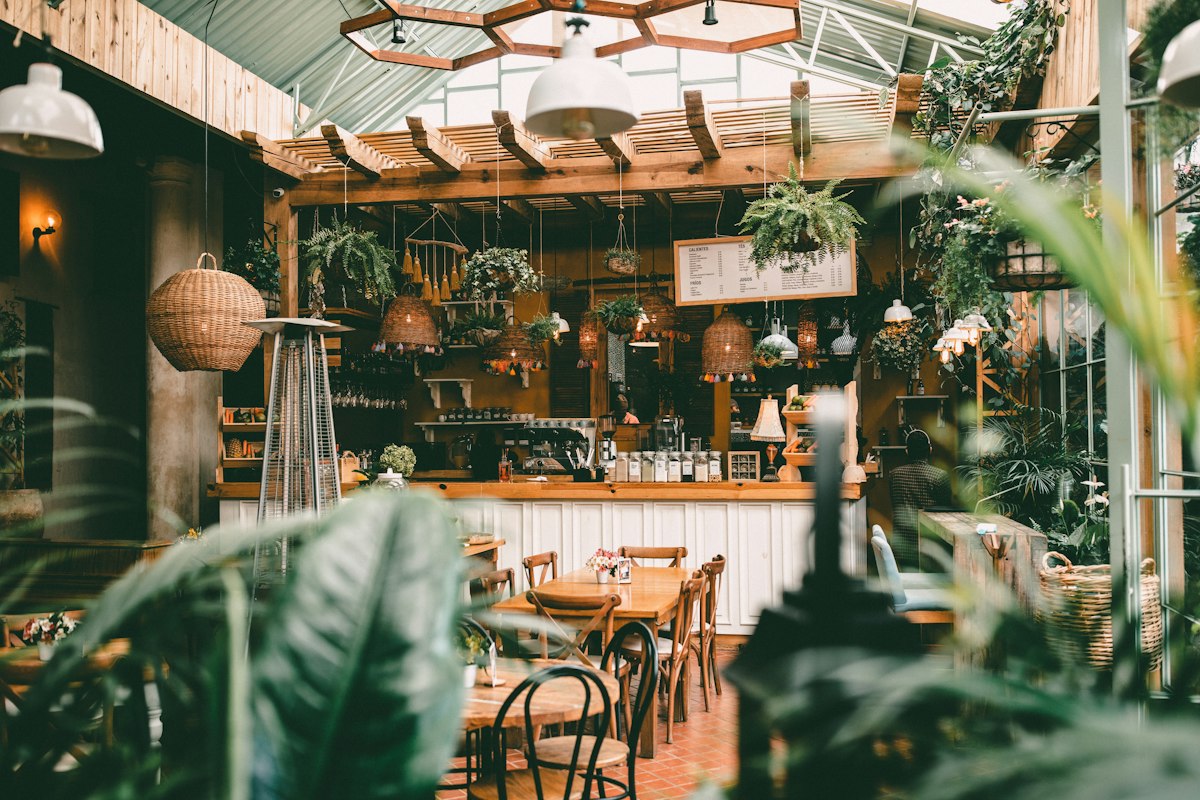
At the tip of Puglia's Salento peninsula, where the Adriatic and Ionian seas converge in a landscape of ancient olive groves, red earth, and dry-stone walls that extend to the horizon, stands a city whose architectural ambition seems almost impossible for its geography. Lecce — population 95,000, elevation 49 metres, distance from the nearest major motorway junction approximately 150 kilometres — is the Florence of the South, the Baroque capital of the Mediterranean, a city where seventeenth-century architects and stonemasons created, in the extraordinarily soft and workable local limestone called pietra leccese, an ensemble of churches, palazzi, piazzas, and convents so extravagantly detailed, so theatrically beautiful, and so remarkably well-preserved that the entire historic centre functions as a single, continuous architectural masterpiece.
The Stone That Made Everything Possible
Pietra leccese — Lecce stone — is the material explanation for an architectural phenomenon that might otherwise seem inexplicable. This calcareous sedimentary rock, quarried from deposits that underlie the entire Salento peninsula at depths of two to ten metres, possesses a property that no other building stone in Italy can match: when freshly cut, it is soft enough to be carved with hand tools as easily as wood, permitting a density of decorative detail — acanthus leaves, putti, grotesque masks, floral garlands, scrolls, cartouches, balustrades — that would require months of labour in marble or granite but can be executed in pietra leccese in days. Once exposed to air, the stone oxidises and hardens progressively, developing over decades a warm honey-gold patina that gives Lecce's Baroque facades their characteristic luminosity, particularly in the late afternoon light that bathes the city from the west.
The result is an urban landscape of staggering decorative intensity. The Basilica di Santa Croce — whose facade, designed by Giuseppe Zimbalo and completed in 1695, features a rose window surrounded by such a profusion of carved figures, animals, fruit, and foliage that it appears to be an architectural hallucination rather than a building — is merely the most famous expression of a decorative programme that extends across hundreds of structures. The Piazza del Duomo — an enclosed architectural space accessible through a single entrance, like a vast outdoor salon — the Chiesa dei Santi Niccolò e Cataldo (founded by the Normans in 1180, redecorated in Baroque style in 1716), the Palazzo dei Celestini, the amphitheatre discovered beneath the Piazza Sant'Oronzo in 1901: Lecce offers a concentration of architectural quality per square metre that rivals any city in Italy, including cities with twenty times its population and a hundred times its tourist infrastructure.
The Property Revelation
For international buyers accustomed to the prices of Tuscany, Umbria, or the Amalfi Coast, Lecce's property market produces a cognitive recalibration that borders on disbelief. A 300-square-metre piano nobile in a seventeenth-century palazzo — original vaulted ceilings in pietra leccese, restored frescoes, courtyard, terrace overlooking a Baroque church — can be acquired for €600,000–€1.2 million. A completed, design-forward restoration of a palazzo apartment — 150–200 square metres, contemporary interiors within historic shells, often with rooftop terraces commanding views across the entire skyline of domes and bell towers — falls in the €400,000–€800,000 range. Entire palazzi — structures of 800–1,500 square metres, with courtyards, multiple levels, and the potential for boutique hospitality or multi-family use — have traded in recent years at €1.5–€3 million.
These prices, which represent approximately one-fifth to one-tenth of equivalent properties in Florence, Rome, or Venice, reflect not a deficiency in the product but a lag in international awareness that the past five years have begun, but far from completed, correcting. The buyers who have arrived first — primarily British, Northern European, and American, with a growing contingent from Australia and the Gulf — have recognised what the Italian domestic market has long understood: that Lecce offers an architectural and lifestyle proposition that no amount of money can replicate elsewhere, because the combination of Baroque artistry, Mediterranean climate, Salentine gastronomy, and genuine urban vitality that defines the city is, quite simply, unique.
The Gastronomic Renaissance
Lecce's food scene has undergone a transformation so rapid and so profound that it now constitutes one of the city's primary attractions for the luxury buyer. The Salentine culinary tradition — built on olive oil of extraordinary quality (Puglia produces 40% of Italy's oil, and the ancient trees of the Salento, some over a thousand years old, yield oils of particular complexity), on the wild herbs and greens that flourish in the Mediterranean macchia, on the seafood of two coastlines, and on a pasta tradition (orecchiette, sagne 'ncannulate, ciceri e tria) that predates the industrial standardisation of Italian cuisine — has been elevated by a new generation of chefs who combine rigorous respect for ingredients with contemporary technique and presentation.
Restaurants like Bros', which earned a Michelin star in 2020 and has since become one of Southern Italy's most talked-about dining destinations, and Primo Restaurant, whose terrace overlooking the Roman amphitheatre offers one of the country's most spectacular dinner settings, have established Lecce on the international gastronomic map. But it is the everyday food culture — the pasticciotto (a warm custard pastry consumed at breakfast), the rustico (a savoury pastry of béchamel, mozzarella, and tomato), the street-food tradition of frisa (dried bread rounds topped with tomatoes and oil), the neighbourhood trattorie where a four-course meal with a bottle of Negroamaro costs €30 — that gives Lecce's gastronomy its depth and authenticity. This is not a food scene manufactured for tourists; it is a living culinary culture that has fed a city for centuries and now, with enhanced self-awareness and a global audience, is experiencing its finest hour.
Two Seas, Zero Crowds
Lecce's position at the centre of the Salento peninsula places it equidistant — approximately 40 kilometres — from two dramatically different coastlines. To the east, the Adriatic coast descends in a series of limestone cliffs, sea caves, and natural swimming pools from Otranto (Italy's easternmost point, whose twelfth-century cathedral contains one of Europe's most remarkable medieval floor mosaics) to Santa Cesarea Terme, a belle-époque thermal resort perched above sulphurous sea grottos. To the west, the Ionian coast offers wide sandy beaches, shallow turquoise water, and a succession of fishing villages — Gallipoli, Porto Cesareo, Santa Maria al Bagno — whose summer beach culture is exuberant, democratic, and entirely Italian.
For the buyer based in Lecce, this dual-coast geography delivers a beach lifestyle of remarkable variety within a thirty-minute drive. The Adriatic for drama and solitude, the Ionian for sand and socialising, and between them, the Salentine countryside — a flat, luminous landscape of olive groves, vineyards, and masserie (the fortified farmhouses that have become Puglia's signature hospitality typology) — offers a visual tranquillity that the hillier, more conventionally picturesque landscapes of Tuscany or Umbria cannot match. There is space here. There is silence. There is a quality of light — flat, warm, immersive — that artists and photographers recognise immediately as exceptional. And there is, for now, an absence of the saturation that has made many of Italy's established luxury destinations feel more like brands than places.
The Investment Horizon
Lecce's trajectory over the next decade is, by reasonable estimation, the most compelling in the Italian luxury property market. The city has achieved the critical mass of cultural infrastructure, gastronomic sophistication, hospitality quality, and international connectivity (Brindisi airport, twenty-five minutes away, receives direct flights from London, Paris, Berlin, Amsterdam, Geneva, and a growing number of other European hubs) that typically precedes a sustained appreciation in property values. The comparison with Marrakech's medina in the early 2000s, or Lisbon's Alfama district in 2010, or Palermo's Kalsa quarter in 2015, is instructive: cities of extraordinary architectural and cultural density, undervalued by the international market, that experienced transformative revaluations once a critical mass of sophisticated buyers discovered what had been hiding in plain sight.
The difference is that Lecce's architectural patrimony is, by any measure, superior to all three comparisons. The Baroque of Lecce is not merely well-preserved — it is pristine, maintained by a combination of municipal regulation, cultural pride, and the physical properties of pietra leccese itself, which ages not by deteriorating but by becoming more beautiful. The buyer who acquires a palazzo today is not speculating on future gentrification — they are acquiring a piece of architectural heritage of objective international significance at a fraction of the price that equivalent heritage commands in better-known Italian cities. When the revaluation completes — and in Lecce, it is a question of when, not if — the early buyers will have secured not merely a property but an address in one of the Mediterranean's most remarkable cities, for a price that their successors will find difficult to believe.
Italy Latitudes
Premium intelligence on Italian luxury real estate, lifestyle, and Mediterranean living.
Request Access →